

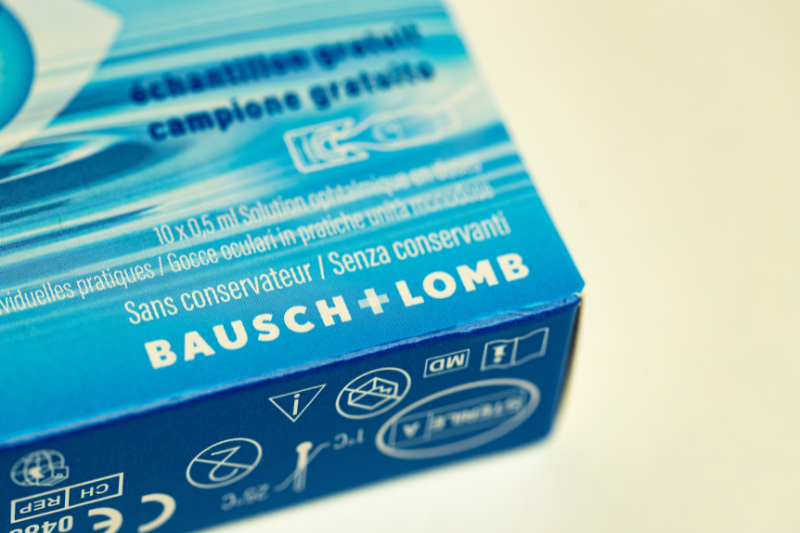
The US FDA has issued the global eye health and pharmaceutical manufacturer Bausch and Lomb with a Warning Letter, citing significant current good manufacturing practice (cGMP) violations at its Tampa, Florida, drug manufacturing facility, including persistent microbial contamination in aseptic processing areas and deficiencies in contamination controls.
The company has a broad eye health portfolio, including prescription ophthalmic medicines, OTC eye-care products, contact lenses and lens-care products and surgical products and devices.
The company lists the Tampa facility on its current locations page as its pharmaceutical manufacturing site.
Persistent microbiological contamination in ISO 5 areas
The FDA said that B&L had routinely recovered out-of-limit microorganisms from ISO 5 areas between 2023 and 2025, including from air, surfaces and personnel.
Particularly notable were Gram-negative organisms Serratia marcescens and Stenotrophomonas maltophilia, which FDA says are frequently associated with water sources, suggesting a moisture-related contamination issue.
The regulator added that B&L continued production without adequate CAPA to address the persistent contamination risk.
The letter also mentioned the use of phones in the aseptic processing area — which are generally prohibited due to major risks of contamination and worker distraction.
Organisms found at the facility were also found in consumer complaint samples
The regulator also stated that B&L had not adequately investigated microbiological departures and adverse trends involving its water-for-injection system, environmental monitoring and personnel monitoring.
The letter also identified that microorganisms recovered at the facility, including Pseudomonas aeruginosa and Aspergillus brasiliensis, were the same genus and species as organisms recovered from several consumer complaint samples.
However, the letter does not say the FDA established that contaminated products caused the consumer complaint.
Deficiencies in RABS and airflow studies
The FDA also identified "design deficiencies" in a restricted access barrier system (RABS), including placement that created "ergonomic difficulties."
It also found insufficient barrier protection in one line.
The FDA also noted that B&L's dynamic smoke studies did not adequately "demonstrate unidirectional airflow across multiple lines," including during equipment setup and assembly.
It stated that "Basic design deficiencies and excessive recoveries of microorganisms from ISO 5 areas indicate that there is significant inherent contamination risk in your current operation."
The regulator therefore has subsequently asked B&L to conduct a critical evaluation of airflow unidirectionality with a qualified consultant, including dynamic smoke studies after remediation and assessment of interventions and other dynamic interactions
Poor aseptic technique by operators
During its inspection, the FDA observed repeated behaviours by operators during filling that could compromise sterility, including the following: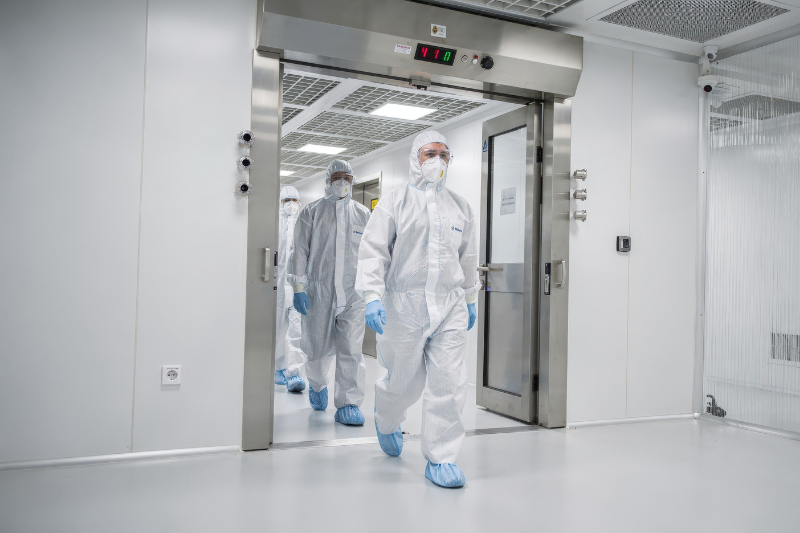
- reaching over exposed bottles to clear jams
- failing to disinfect appropriately
- blocking unidirectional airflow
- contacting sterile portions of aseptic equipment
- inappropriate handling of sterile components and
- using equipment inappropriately to move waste.
Inadequate media-fill validation
On a sterile manufacturing note, the FDA found that B&L's process simulations/media fills used substantially fewer units than its commercial batch sizes, meaning they did not sufficiently represent the contamination risks associated with its aseptic lines.
More notably, the letter said B&L documented a media fill failure on line 16 in July 2025, involving fungal contamination (Neovaginatispora magiferae) in one unit and the spore-forming Gram-positive organism Geodermatophilus obscurus in another.
An overall "ineffective quality system"
The FDA's broader conclusion was that B&L "does not operate an effective quality system in accord with cGMP," citing insufficient management oversight and concerns that the quality unit was not properly enabled to exercise its authority or fulfil its responsibilities.
The regulator called for executive management to immediately assess B&L's global manufacturing operations.
B&L had initially responded with EM data, sterility test results and foreign matter complaint rates to justify its aseptic processing operation as being in control, but the FDA rebuked this, saying that a sterility test "cannot solely be relied upon alone as justification to release drug product batches," because it is only the final check in a wider set of design and process controls intended to prevent contamination.
The FDA has given a substantial remediation package for B&L, including the following:
- an independent comprehensive review of the environmental monitoring programme
- assessment of sampling locations/frequency, limits, trend analysis and deviation investigations
- a comprehensive independent assessment of manufacturing design and microbiological hazards
- a risk assessment of potentially objectionable microbiological contamination
- investigations into all batches with potential objectionable contamination or OOL microbiological results
- microbiological batch-release specifications
- testing of retain samples from all in-date batches, including microbiological quality
- remediation of aseptic processing lines and cleanrooms
- new/adequate dynamic smoke studies and
- a detailed CAPA and validation plan.
The Warning Letter could trigger recalls and product interruptions if the company's response to it is not satisfactory.


