
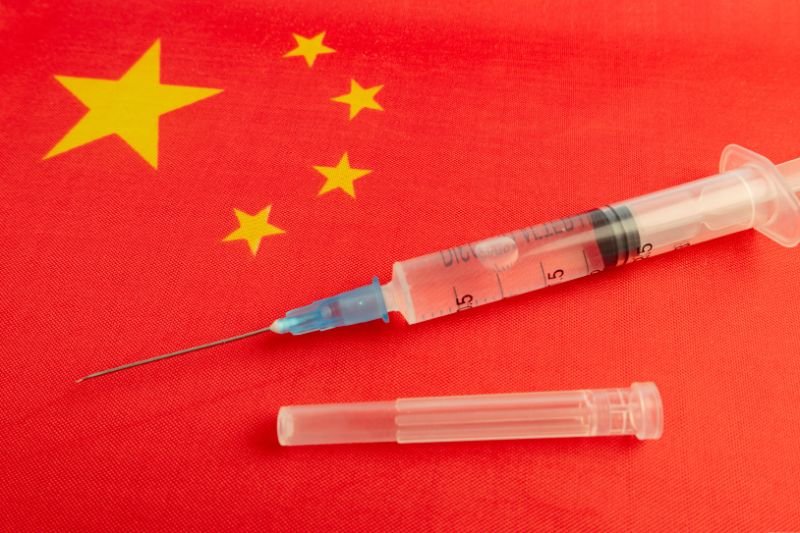
The BIOSECURE Act is on track to become US law after its inclusion in the final draft of the FY26 National Defense Authorization Act (NDAA), which authorises $901bn in national security spending.
The defence bill was released by Congress this week.
The final text contains language slipped in that would significantly hinder certain Chinese life sciences companies' ability to secure federal contracts with the US.
According to the text in the bill, executive agencies would be banned from procuring biotechnology equipment or services from companies "of concern", which the legislation defines as those with ties to the Chinese military.
Additionally, executive agencies would be prohibited from entering or renewing contracts with drugmakers and other life sciences outfits that leverage those blacklisted companies’ services, effectively barring certain Chinese service providers from the US market.
Essentially, this is the same as previous iterations of the bill, such as the one that came out in 2024, which gave American companies until 2032 to terminate their associations with Chinese firms.
However, this latest amendment does not name specific Chinese companies, unlike its predecessor, which sparked controversy by explicitly naming five Chinese companies of concern: WuXi AppTec, WuXi Biologics, BGI Group, MGI and Complete Genomics.
Instead, the new version of the bill now relies on a pre-existing Defense Department list of companies that still calls out genetic testing outfit BGI Group and its spinoff MGI Tech, but notably omits the WuXi companies, such as WuXi AppTec, which are large forces for contract manufacturing and research in the biopharma industry.
However, according to Bloomberg, the Pentagon is pushing to add Wuxi AppTec to the 1260H list.
Despite going through several amendments, controversy has continued to surround the BIOSECURE Act, with concerns remaining about the impact on pharma R&D and manufacturing given the heavy reliance on China-based companies in the supply chain.
The House is expected to vote on the NDAA this week, with the Senate to follow before the end of December, on the final language of the bill before it lands on the desk of President Donald Trump.


