
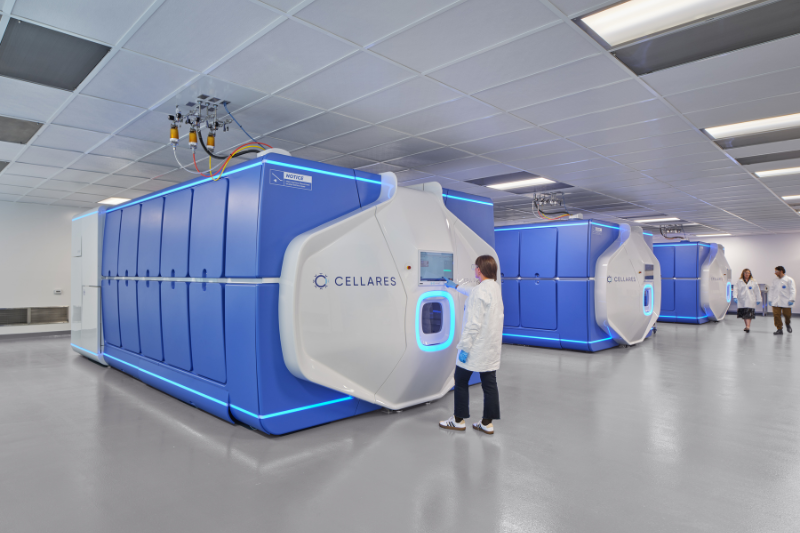
Cellares has announced a collaboration with the Stanford Center for Definitive and Curative Medicine (CDCM) and Stanford Innovative Medicines Accelerator (IMA) to automate manufacturing and release testing for gene-edited haematopoietic stem cell (HSC) therapies.
Under the partnership, Cellares will establish a standardised platform manufacturing process on the Cell Shuttle and platform release assays on the Cell Q, designed to apply across multiple indications.
The collaboration aims to reduce hands-on variability and create a scalable foundation to help move academic innovation toward clinical development.
Automation efforts are already underway with the HARBOR KNOCK (safe harbour knock-in) gene-editing approach.
Gene-edited HSCs are being developed as durable, potentially one-time treatments that rebuild the blood and immune system with corrected cells for patients with HIV and rare inherited diseases.
Many of these conditions currently lack effective treatment options, highlighting the need for scalable, reliable manufacturing approaches that can support patient access as programmes advance.
Dr Matthew Porteus, Director of the CDCM at Stanford University School of Medicine, has developed an HSC gene-editing approach that can be applied across HIV and a wide range of monogenic diseases.
One of their goals is to identify a manufacturing process that is consistent and scalable.
Cellares’ technology in automation could remove the barrier to making therapies more cost-effective and accessible.
"Gene-edited haematopoietic stem cells have the potential to address the root cause of disease for patients who today have limited or no treatment options," said Fabian Gerlinghaus, co-founder and CEO of Cellares.
"With Stanford Medicine, we’re building a manufacturing and analytical foundation that can be applied across many rare disease programmes to improve patient access."


