
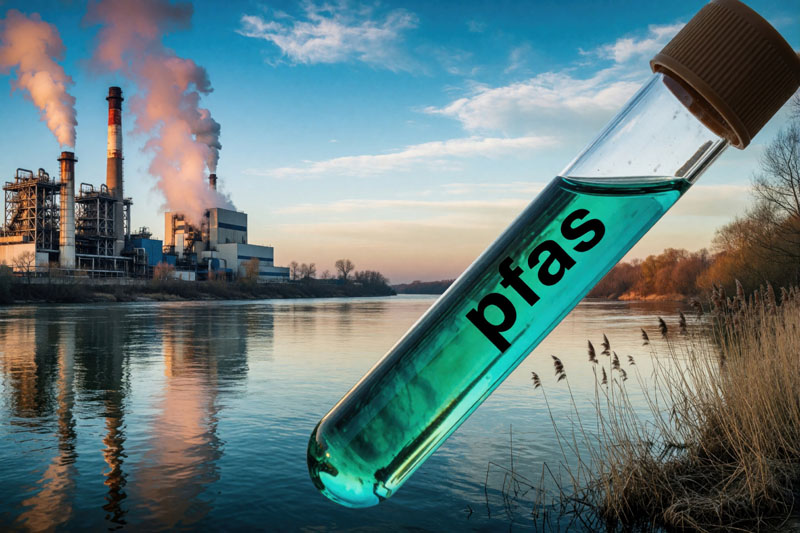
Manufacturers can no longer assume that the chemicals and materials they rely on today will remain acceptable tomorrow.

Regulatory requirements are evolving across substances and jurisdictions, creating a challenge that goes beyond any single restriction: knowing what is used throughout the operation, where it comes from and how quickly alternatives can be found.
Per- and polyfluoroalkyl substances (PFAS) are a timely example of this wider shift, explains David Picton, Senior Vice President, Safety and Sustainability, at EcoOnline.
It’s a revolution in chemicals management that’s set to fundamentally reshape global supply chains, eliminate “forever chemicals” from most consumer goods and drive rapid industrial product redesign in everything from food wrapping to aerospace engineering.
In March 2026, the European Chemicals Agency's committees backed an EU-wide PFAS restriction, finding existing controls insufficient, with evaluation due to conclude by year-end.1
It is the most comprehensive restriction ever tabled under REACH, spanning more than 10,000 substances across virtually every sector.2


