


When Codis completed its acquisition of the former Catalent site in Nottingham, UK, the deal was framed internally as the missing piece of a much bigger picture. The company's ambition, according to those working across both its Nottingham and Haverhill locations, is to become Europe's leading end-to-end spray-drying provider, offering development, scale-up and commercial manufacture across one integrated organisation.
 "I think [being] the single solution for the biotech development cycle," says Matthew Streeter, General Manager at Nottingham, when asked to sum up the site's vision in a sentence. "Taking our expertise in drug development, and obviously for spray drying, it's an area now where we can really leverage that knowledge ... Codis can offer that end-to-end solution, and that's really what we're about."
Why Nottingham?
Nottingham expands Codis’ UK capabilities: deep formulation development expertise, a wide analytical toolkit, oral solid dose manufacturing (tablets, capsules, mini-tablets) and — unusually for a site of its size — a commercial licence that allows products to be taken all the way from preclinical development through to commercial launch.
Fiona Kielthy, Director of Operations, says of the premises: "People don't realise that we are actually really good at developing formulations. We have a lot of scientific knowledge and capabilities — for a small site, we pack our own little punch, so to speak. We can do a lot of techniques in one place rather than having to go to other vendors."
This new location — combined with Haverhill's intermediate-scale PSD2 spray dryer and the PSD4 unit now under construction there — creates a continuum that spans the full development journey. The company can now offer a route from lab bench to commercial tonnage, all on GEA equipment.
The "PSD" numbers refer to dryer scale, with Nottingham's PSD1 at clinical scale, producing material for early-phase trials. This limits it to batches of around a couple of kilos. Haverhill's PSD2 sits between clinical and small commercial scale and the PSD4 is a large, solvent-capable commercial-scale dryer.
"Making 100 grams is one thing, but if I need 100 kilograms, I need a process and a way to do that that is scalable," says Mark Macdonald, Technical Sales Director at Haverhill. Time matters too: "Rather than spend two weeks spraying it over here, Haverhill can do it in a day," says Jack Quigley, Senior Scientist in Nottingham's product development team.
For Nottingham, that means products can move up in scale without leaving the company. Streeter explains: "We've now got access to [Haverhill's] PSD2. I've already got products that would naturally fit on a PSD2, whereas I'm having to sublot on a PSD1 and do multiple sublots just to make it economically viable. If we could just move that straight into a PSD2, we can take time out of the supply chain for our clients.”
The benefit runs both ways. Haverhill had no PSD1 before the acquisition, so Nottingham's dryer supplies the missing rung below the PSD2. Clients arriving at Haverhill who need development work at a smaller scale than the PSD2 suits can now start in Nottingham first. "We've got clients going to Haverhill that need a bit of development work at a smaller scale than would fit a PSD2, so they're potentially going to come here first, ready to move on to the PSD2 and 4 at a later date," says Streeter.
Investing at scale: the PSD4
The clearest signal of Codis' ambitions sits at Haverhill, where the company is investing in a new PSD4, a large-scale, solvent-capable commercial spray dryer. It is scheduled for validation in 2027, with construction well underway and equipment delivery expected from late this year into early next year.
Interest has been strong even before the unit goes live, says Macdonald: "We're seeing a huge amount of interest already ... the project is becoming real as partners look to align programmes to this significant capacity expansion."
Codis says it plans to share further updates as the project progresses.
Process optimisation: what end-to-end capability actually solves
For readers focused on manufacturing efficiency, the more interesting story sits behind the acquisition headlines: what integrated, single-site (or single-organisation) capability actually does for process quality and speed.
One of the most persistent challenges in scaling any spray-dried product is technology transfer. Each handover introduces risk: process parameters that worked at gram-scale don't always translate cleanly to kilogram- or tonne-scale equipment and reformulation late in development can be costly and slow. Codis has said that bringing Nottingham and Haverhill under a single quality system is intended to reduce this kind of risk.
The industry's answer to this problem has increasingly been Quality by Design (QbD) — building process understanding in early development so that scale-up decisions are based on real data rather than guesswork.
This is where an integrated site network has a real technical advantage compared with a fragmented supply chain of separate vendors. Scaling early with access to larger-scale capacity can help to reduce the reformulation delays that often occur when a process designed at small scale doesn't translate smoothly to commercial equipment, positioning programmes for faster market entry.
For Nottingham's formulation scientists, that's already changing how projects are scoped: rather than developing a formulation in isolation and hoping it transfers cleanly, teams can work backwards from Haverhill's PSD2 and PSD4 parameters from the outset — designing "scale-ready" processes rather than discovering scale-up problems after the fact.
Quigley points to a very practical version of this: "We want to learn from them — from a scale-up perspective — how we can have a project come through the door here and know it's ready for us to package up and hand over to them, with minimal issues or challenges from technical transfers."
The science driving demand
The renewed investment isn't happening in isolation but rather comes as a response to a shift in the type of molecules coming through drug development pipelines. An increasing proportion of new drug candidates are poorly soluble, creating formulation and bioavailability challenges that older, simpler molecules didn't present.
That's playing out on the ground in Nottingham's formulation labs too. Quigley describes a growing number of "fun" but complex projects, including molecules identified using AI that look promising on paper but present real-world formulation headaches.
"The regulators preferred their molecule to be crystalline because it's predictable in that form. When it's amorphous, it's a bit less predictable," he says of one such case (a molecule so hygroscopic and unstable in solution that the team had just 24 hours to spray it after preparation). "Twenty years ago, you'd just throw them in the bin and look to the next one," he says of how far the bar for formulation difficulty has shifted.
Positioning against the market
Codis is positioning itself as an agile alternative to established players in the spray-drying space, notably Hovione, which is currently seen as the European market leader. "We're a relatively small company: our selling point is going to be about being nimble, quick to market and flexible," Steven Facer, Chief Commercial Officer, explains, contrasting this with the more bureaucratic processes typical of larger CDMOs.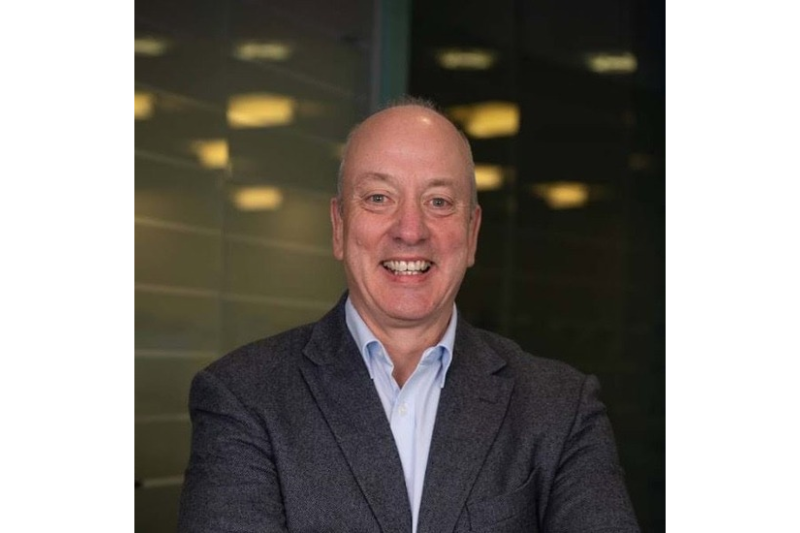
That trust-based relationship with clients, many of whom are small biotechs betting their future on a single molecule, is central to how Codis frames its value. "You're giving your babies over to us," Facer adds. "If you've got a new molecule and you're a small biotech — do I trust you to do this work for me? Because it's their livelihood. Often they don't have anything else."
Streeter echoes this, saying: "Funding has become the biggest challenge for biotech, so they have to choose the right partner. We need to make sure we don't let them down. Quite often it's a company with one molecule, and if that asset fails, that's the end of the company."
Looking ahead
 With the Nottingham integration underway and PSD4 construction progressing at Haverhill, Codis is also eyeing new markets, including South Korea, the US (supporting pre-IND development work) and Australia, where lighter regulatory frameworks are allowing for faster first-in-human studies.
At the Nottingham site, the mood is now one of renewed momentum. As Streeter puts it, summing up the facility’s role in Codis' wider ambitions: "We are a development site, and we're a drug product site. What we now have is genuine commercial scale behind us, so we can be that one-stop partner ... Codis can offer that end-to-end solution and that's really what we're about."


