
Martindale Pharma improves Aurum pre-filled syringe packaging
To ensure ease of use and improve patient safety
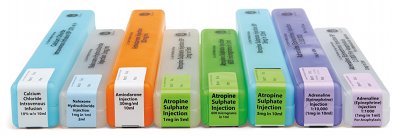
The Aurum syringes are used for on-the-spot administration of drugs where high visibility and simple drug identification is crucial.
The Brentwood, Essex-based firm has redesigned the range to enhance ease of use and help improve patient safety. Specific improvements include new colour-differentiated packaging; colour-differentiated translucent boxes that confirm contents; and colour-differentiated labels. In addition the firm has improved tamper-evident labels and the packaging is latex-free and Luer Lock fitting.
The firm says its new colour-differentiated packaging meets national and international colour differentiation standards on syringe labelling and also the Royal College of Anaesthetists recommendations on syringe labelling in critical care.
You may also like
You need to be a subscriber to read this article.
Click here to find out more.
Click here to find out more.

PPWR: why interpretation and alignment matter more than awareness
Read moreThe EU Packaging and Packaging Waste Regulation is often described as a packaging regulation. For pharmaceutical manufacturers, however, its implications extend well beyond packaging alone
Trending Articles
-
You need to be a subscriber to read this article.
Click here to find out more. -
You need to be a subscriber to read this article.
Click here to find out more.
You may also like
You need to be a subscriber to read this article.
Click here to find out more.
Click here to find out more.
Manufacturing
![Stevanato Group and Aptar Pharma collaborate to accelerate prefilled syringe system selection]()

Stevanato Group and Aptar Pharma collaborate to accelerate prefilled syringe system selection
Joint system-level testing combines Stevanato's glass syringes with Aptar's elastomer components to provide key data earlier in development and inform packaging decisions for sensitive biologics and other injectable therapies
Manufacturing
![Why CAPA keeps failing and what strong organisations do differently]()

Why CAPA keeps failing and what strong organisations do differently
This white paper examines why CAPA systems often close records without preventing recurrence, tracing breakdowns to investigation quality, risk reasoning, and organisational behaviour rather than procedural gaps. It outlines what differentiates compliant CAPA programmes from those that consistently reduce repeat findings and inspection risk

You need to be a subscriber to read this article.
Click here to find out more.
Click here to find out more.
Manufacturing
![Beyond FAT and SAT: a practical framework to qualify multivendor pharmaceutical manufacturing lines (part II)]()

Beyond FAT and SAT: a practical framework to qualify multivendor pharmaceutical manufacturing lines (part II)
How a centralised qualification matrix reconciles vendor documentation, integrates risk-based verification and connects commissioning findings with deviation, CAPA and audit-ready evidence

You need to be a subscriber to read this article.
Click here to find out more.
Click here to find out more.
Regulatory
![Beyond FAT and SAT: a practical framework to qualify multivendor pharmaceutical manufacturing lines (part I)]()

Beyond FAT and SAT: a practical framework to qualify multivendor pharmaceutical manufacturing lines (part I)
Documentation Specialist Snehal Godse explains why unit-level FAT and SAT leave critical multivendor interfaces unverified and proposes a risk-based framework to qualify product transfers, control signals, interlocks, sensors and shared utilities