
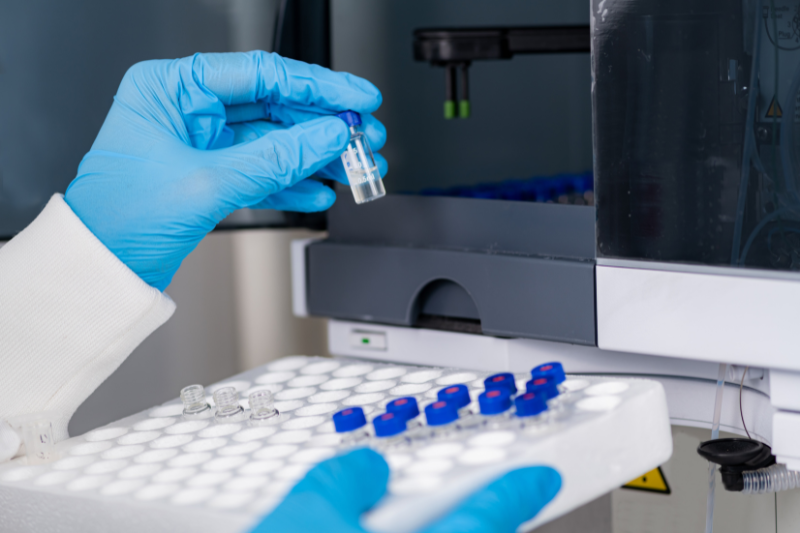
Chemical and pharma giant Merck has announced the launch of a new bio-based solvent portfolio specifically for high-performance liquid chromatography (HPLC).
The products will be manufactured using renewable feedstocks, that will deliver around 25.9% lower CO2 emmissions than traditional fossil-fuel-based HPLC-grade solvents while still preserving the performance required for demanding analytical workflows.
"Our new bio-based HPLC solvents represent the next generation of high-performance liquid chromatography," said Karen Madden, Chief Technology Officer, Life Science business of Merck.
"Customers are looking for solutions that help reduce environmental impact without compromising performance quality."
This innovative portfolio aims to deliver the precision, quality and reliability expected in HPLC and is designed to integrate seamlessly into existing methods.
These new bio-based solvents will be compatible with HPLC and LC-MS methods, which Merck says will make them easy to adopt in regulated environments.
In HPLC, solvents serve as the mobile phase, transporting samples and enabling the separation and quantification of components. This is essential for reliable data in drug research, quality control, environmental monitoring and diagnostics.
The new portfolio includes drop-in replacements for acetonitrile, methanol and ethanol. As these solvents will match the performance of conventional options, labs can transition without redeveloping analytical methods.
The launch expands Merck's range of greener alternatives, with the company adding that the new bio-based solvents align with its focus on promoting sustainable scientific practices.


