
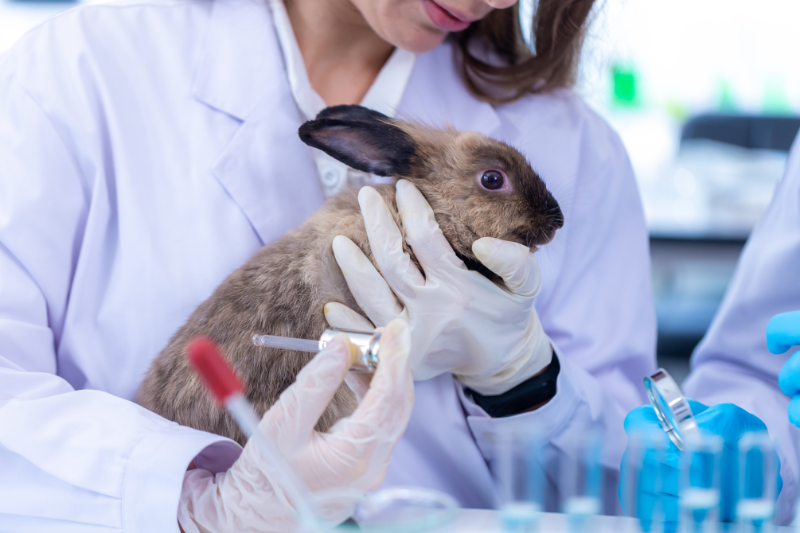
The UK's Medicines and Healthcare products Regulatory Agency (MHRA) has announced it is attempting to phase out animal testing by helping developers make greater use of New Approach Methodologies (NAMs).
The regulator said that by offering early review of non‑animal data and clarifying how it will be assessed, it will give developers more confidence when making marketing applications based on evidence generated without animal testing.
The initiative aligns with the Government's long-term strategy to reduce animal use in drug development, while ensuring that medicines continue to meet rigorous safety and efficacy standards, where complete elimination is not yet feasible.
Julian Beach, Interim Executive Director, Healthcare Quality and Access, said: "A clearer regulatory route for medicines developed without animal testing will help accelerate the transition to modern, predictive science and support the Government's strategy to reduce and ultimately replace animals in research."
Advances such as AI‑driven analysis and human‑derived cell models mean some medicines no longer require animal studies to demonstrate safety and efficacy.
"Our offer to review study data ahead of a full marketing application is designed to help researchers who are adopting these approaches build the robust evidence needed to demonstrate safety and efficacy."
While each application will be assessed on a case-by-case basis, considering the totality of the evidence presented and the proposed clinical use, the new guidance sets out the following general regulatory principles:
- Generic/biosimilar products or drugs that are not pharmacologically active in animals should not be tested on animals
- Toxicity testing of biological products in animals should be conducted only in species shown to be pharmacologically relevant
- Products with a well-recognised pharmacological profile may enter UK clinical trials without prior animal testing
- Products with a novel pharmacological action should be tested on animals, in line with international guidelines
- Products that cannot be tested for efficacy in clinical trials, such as vaccines for some emerging pandemic infectious diseases, should be tested on animals.
To encourage the use of non-animal models (NAMs) and address concerns about alternatives to animal testing, the MHRA has committed to reviewing preliminary data from drug trials that utilise non-animal methods.
By the end of 2026, companies that have developed products without animal testing will have the opportunity to submit Module 4 of their Marketing Authorisation application for an advance review by the MHRA.
In this process, companies will need to submit Module 4, the Investigator Brochure and the final report from at least one clinical trial. The MHRA will provide a non-binding written opinion on the adequacy of the submitted data, either accepting it or outlining any deficiencies.
This opinion will be included in the Marketing Authorisation application, along with the previously submitted Module 4 and any updated versions. The MHRA will conduct a further review in consultation with the Commission on Human Medicines and will either endorse or reject the application, providing reasons for any rejection.
The regulatory body noted that companies submitting Module 4 in advance will be required to pay a fee to cover administrative costs and to discourage unsuitable applications.
PETA's Head of Science Policy, Dr Julia Baines, also commented on the news: "The days should be gone when animals were treated as disposable laboratory equipment, force-fed chemicals, drugged or cut up in experiments and so PETA applauds the MHRA for signalling that non-animal approaches can and should be used in pre‑clinical studies."
This guidance aligns regulatory practice with scientific progress, such as organs-on-chips and AI technology, as outlined in the UK’s roadmap to phase out animal use in science.
"It also gives developers the confidence to invest in state-of-the-art methods that are demonstrably faster, more predictive of human reactions and yield better patient outcomes. PETA scientists are working with medical regulators now to advance cruelty-free testing strategies, showing that innovation is not only possible, but must be adopted or we will be left in the dust."


