Offers increased operational flexibility and enhanced process monitoring
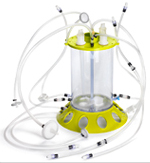
EMD Millipore, the life science division of Merck KGaA of Germany, has enhanced its Mobius 3L CellReady Bioreactor so that it offers increased operational flexibility and updated process monitoring capabilities. Millipore says this new version is the ideal single-use solution for bench-scale process development of cell culture processes.
New features include an injection port for small volume additions, a sub-surface fluid port for either addition or removal, and an extra port for the insertion of a third probe. The enhanced version replaces the first-generation Mobius launched in 2009.
Andrew Bulpin, head of services and solutions, Process Solutions, at EMD Millipore, said the enhanced operational and process monitoring capabilities in the new version would enable operations such as perfusion and monitoring of additional cell culture parameters such as carbon dioxide, viable cell density or optical density.
Designed to replace traditional glass benchtop bioreactors, the Mobius CellReady 3L Bioreactor has a standard stirred-tank format for use in development and optimisation of cell culture processes.
According to Millipore, by eliminating time-consuming steps associated with cleaning, assembly, and sterilisation, the Mobius CellReady 3L bioreactor significantly reduces the turnaround time typically associated with glass bioreactors.