The contract development and manufacturing (CDMO) sector has moved from the periphery of pharmaceutical operations to the centre of many companies’ development and launch strategies.
As pipelines tilt toward complex biologics, targeted modalities and rare disease therapies, demand is shifting from transactional, capacity driven outsourcing to integrated partnerships that span development, manufacturing, packaging and global supply.
That shift is increasingly visible in the investment patterns, business models and expectations that will be front of mind for sponsors going forward.
David O’Connell, Director of Scientific and Technical Affairs at PCI Pharma Services, reports.
The scale of the CDMO opportunity
Market data highlights how fundamentally this transition has become. The global pharmaceutical CDMO market was valued at $197 billion in 2025 and is expected to grow to approximately $369 billion by 2034, with a compound annual growth rate of about 7.1%.1
Within this sector, biologics-focused CDMOs are expanding even more rapidly, with some analyses predicting growth from $22–26 billion mid-decade to $90–125 billion by the mid-2030s at mid-teen CAGRs.
Several drivers sit behind these numbers: escalating pipeline complexity, rising volumes of biologics/advanced therapies, the increased use of high-potency APIs and pressure to shorten development timelines while managing cost and risk.
For many organisations, particularly small and mid-sized biotechs, building internal capacity for every critical modality and technology is neither practical nor economically rational.
This makes strategic outsourcing to sophisticated CDMOs a default choice rather than a contingency.
Why integration is gaining traction
Against this backdrop, the industry has been steadily exploring “end-to-end” or integrated CDMO models that link development and manufacturing across the value chain.
DCAT Value Chain Insights roundtables during the past few years have highlighted a growing appetite for single-source providers that can manage both API and drug-product development, and support scale-up through to commercialisation.2,3
Sponsors cite fewer interfaces to manage, faster decision-making, streamlined technology transfer and clearer accountability for timelines and deliverables as key reasons to favour integrated models.
This trend is particularly pronounced among smaller and virtual companies with lean internal CMC and procurement teams for whom co-ordinating multiple specialist vendors can quickly become a distraction from core scientific and clinical priorities.
Even larger pharmaceutical companies, historically more siloed and cautious about single-vendor arrangements, are beginning to show interest as integrated CDMOs demonstrate the ability to deliver complex programmes reliably across modalities and geographies.
Complex modalities are redefining requirements
The nature of the pipeline is accelerating this shift. Advanced biologics and targeted therapies, including antibody–drug conjugates (ADCs), targeted protein degraders (TPDs), cell and gene therapies and other precision approaches, are no longer niche outliers.
For example, the biologics CDMO segment alone is expected to grow from $22–26 billion in the mid-2020s to $55–95 billion by the mid-2030s, with CAGRs typically reported in the 9–18% range.4,5
These modalities bring a distinct set of manufacturing and development challenges, including the following:
- complex analytical requirements, including bioassays and functional testing to demonstrate that structurally intact products remain biologically active
- high potency and narrow therapeutic windows that necessitate advanced containment and sophisticated dose control
- sensitivity to heat, light and oxygen, thereby increasing reliance on technologies such as lyophilisation and specialised packaging.
Meeting these demands requires more than bolt‑on capacity. CDMOs must align formulation and process development, analytical sciences, sterile or high-potent solid-dose manufacturing, device engineering and global supply within a coherent framework that can adapt as molecules progress from first-in-human trials to commercial scale.
From clinical complexity to commercial reality
End-to-end models are particularly compelling when programmes combine scientific complexity with structural constraints.
Rare disease and precision medicine development often involves very small, globally dispersed patient populations, with single batches representing a significant share of the worldwide supply.
In such settings, misaligned packaging, distribution or regulatory strategies can derail timelines as effectively as any technical setback in the plant. Integrated CDMOs aim to tackle this by connecting
- early phase development and clinical manufacturing, including microbatch and high-potent operations
- clinical trial services, from pack design and comparator sourcing to multilanguage labelling, QP release and depot management
- commercial-scale manufacturing and packaging, including support for drug-device combination products and serialisation.
DCAT analyses suggest that sponsors increasingly expect these capabilities to be offered as part of a single, orchestrated relationship, rather than as a collection of loosely linked services.2,3
In theory, this reduces the number of technology transfers, avoids redundant validations and supports more consistent data packages for regulatory filings across regions.
Packaging and devices as strategic levers
One area in which the impact of integration is particularly visible is packaging and delivery systems.
The steady rise of prefilled syringes, autoinjectors and other self-administration devices has shifted sterile packaging from a largely downstream activity to a critical dimension of product performance and patient experience.
Market commentators point to several converging trends:
- strong growth in prefilled syringe and autoinjector volumes, especially for chronic diseases and biologics
- increased emphasis on human-factors engineering and device usability in regulatory review and reimbursement decisions
- the need for scalable assembly and packaging platforms that can support early clinical lots and high-volume commercial runs without fundamental redesign.
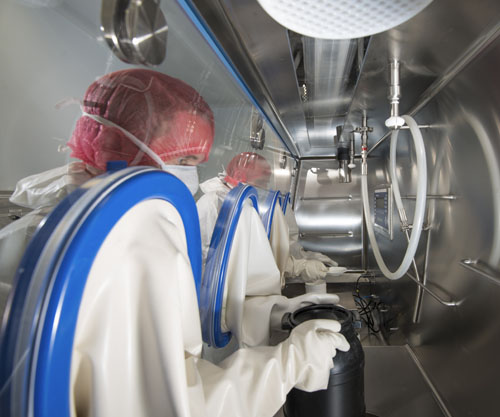
End-to-end CDMOs with both aseptic fill-finish and device assembly/packaging expertise are well placed to bridge these requirements, ensuring that choices made regarding primary container selection, formulation and closure systems do not create friction later when devices are introduced or scaled.
Their investments in dedicated drug-device infrastructure — such as large-scale facilities for injectable combination products and advanced secondary packaging — reflect this longer-term lifecycle view.
Investment signals from advanced CDMOs
Capital deployment patterns offer another lens regarding how the model is evolving.
Recent announcements have highlighted multiple hundred-million-dollar programmes aimed at expanding capacity for advanced drug delivery and drug-device combination products, particularly in injectables.
PCI, for instance, has committed more than $365 million to new and expanded facilities in North America and Europe, including a 545,000-square-foot site in Illinois and new operations around Dublin, focused on assembly, packaging and storage for complex injectable formats.
These investments are notable not just for their size, but for their focus.
Rather than generic capacity, they tend to target
- patient-centric injectable formats (vials, prefilled syringes, autoinjectors, on-body injectors, etc.)
- flexible, modular lines spanning low- to high-speed operations
- integrated cold chain and ultra-cold storage, often extending to −80 °C.
In parallel, CDMOs are upgrading digital capabilities, from serialisation and anticounterfeiting systems to supply chain visibility tools, reflecting the growing importance of traceability and late-stage customisation in both clinical and commercial settings.
Implications for decision-makers
For pharma companies, the question is increasingly not whether to work with CDMOs, but how to configure those relationships. Emerging data and industry commentary point to several practical considerations.
- Match integration level to portfolio risk. Highly complex, modality rich pipelines with lean internal CMC resources may benefit most from deep, single-partner integration, whereas more standardised products can still thrive in multivendor ecosystems.
- Interrogate true end-to-end capability. The label “integrated” can mask significant internal silos; understanding how knowledge, quality systems and decision-making flow between a CDMO’s development, manufacturing and packaging units is critical.
- Look beyond capacity to modality fit. Investments in biologics, high-potency handling, device assembly and cold chain are strong indicators of a provider’s readiness for future pipelines, not just today’s projects.
- View packaging and devices early. As prefilled and self-administered formats proliferate, engaging packaging and device teams at the same time as formulation and process development is becoming a necessity rather than an add-on.
The CDMO sector’s growth figures and investment trajectories suggest that integrated models will continue to gain ground as pipelines become more complex and timelines more compressed.
For sponsors, the challenge — and opportunity — lies in identifying partners whose end-to-end offerings are not only broad on paper, but genuinely aligned with the scientific, operational and regulatory realities of bringing the next generation of complex therapies to patients.
References
- www.precedenceresearch.com/pharmaceutical-cdmo-market.
- www.dcatvci.org/features/cdmo-trends-end-to-end-service-providers/.
- www.dcatvci.org/features/inside-the-trenches-end-to-end-cdmos-cmos/.
- www.biospace.com/press-releases/pharmaceutical-cdmo-market-size-worth-usd-368-70-bn-by-2034-driven-by-biologics-and-advanced-therapies-demand.
- www.towardshealthcare.com/insights/biologics-cdmo-market-sizing.