For two decades, “high potency” has served as the industry's broad descriptor for active pharmaceutical ingredients (APIs) that require specialised handling, engineering controls and risk-based containment.
The term highly potent active pharmaceutical ingredient (HPAPI) is embedded in regulatory language and CDMO service offerings.
Yet as the potency landscape shifts, the terminology increasingly fails to capture the demands of a new generation of molecules, writes David O’Connell (pictured), Director of Scientific Affairs at PCI Pharma Services.

A growing subset of small-molecule therapies — including targeted protein degraders (TPDs) such as PROTACs, SERDs and molecular glues, as well as certain ADC payloads — exhibit far greater potency, narrower therapeutic indices and more complex toxicology than the compounds that originally shaped the HPAPI category.
Their behaviour often pushes well beyond the assumptions built into traditional high-potency facilities, forcing both developers and CDMOs to rethink how they describe and manage risk.
Amid this shift, an informal term has surfaced: ultra-high potency. Although not regulatory or universal, it reflects a practical need to distinguish compounds at the uppermost end of the potency spectrum.
The limits of existing terminology
Despite its ubiquity, “HPAPI” lacks a harmonised global definition. Most organisations rely on conventions: therapeutic doses of 1 mg/day or less, OELs of approximately 10 µg/m³ and toxicological profiles wherein even slight deviations in exposure can cause harm.
Between 30% and 50% of new small molecules now fall under this broad HPAPI umbrella, subsequently grouping compounds with very different hazard profiles.
For example, a cytotoxic drug with an OEL of 5 µg/m³ may sit in the same category as a TPD requiring submicrogram-level containment.
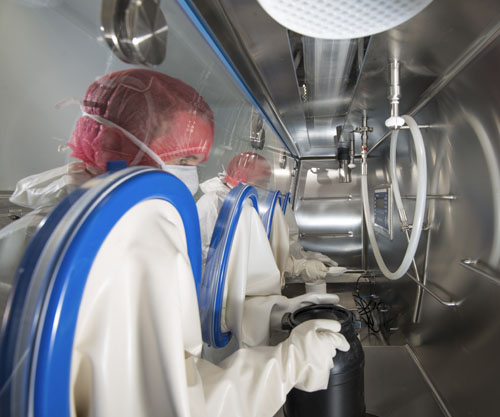
Although formal OELs for many of these emerging modalities are not yet widely published, their catalytic mechanisms, very low therapeutic doses and evolving safety profiles suggest a need for much tighter containment than traditional highly potent compounds.
Their exposure limits, mechanism-driven toxicity and operational needs differ materially … yet the terminology does not.
The result is a vocabulary that no longer reflects reality. As more assets enter the highest potency bands, the lack of distinction between “high” and “ultra-highly” potent compounds creates ambiguity that affects risk assessment, facility selection and programme planning.
Three key industry developments have accelerated this challenge.
- A changing pipeline: Precision oncology, TPDs, molecular glues and other mechanism-driven modalities have introduced potency levels beyond what many legacy HPAPI facilities were designed to handle.
- Outsourcing complexity: CDMOs increasingly receive early stage assets with extreme potency profiles, often before comprehensive toxicology is available. Sponsors default to the only familiar term (HPAPI), only to discover that their compounds require substantially tighter containment.
- Capability differentiation: HPAPI capability is now common throughout the CDMO landscape. Many organisations can safely handle Occupational Exposure Bands (OEB) 3–4; far fewer can operate confidently at OEB 5–6. Without clearer language, sponsors struggle to distinguish between routine high-potency support and facilities equipped for the uppermost potency bands.
Where ultra-high potency fits
The term “ultra-high potency” has gained traction as a functional way to identify molecules assigned to the upper limits of occupational exposure banding — typically OEB 5–6 — in which expected OELs fall below 1 µg/m³ and, in some cases, into the 0.1–0.01 µg/m³ range.
What distinguishes these molecules is not only their potency but the nature of their biological activity. Many induce protein degradation or multi-pathway signalling, making off-target effects less predictable and prompting more conservative occupational protection strategies.
Their ultra-low therapeutic doses narrow manufacturing tolerances and increase the consequences of cross-contamination, driving the need for highly sensitive analytical methods, enhanced cleaning strategies and tighter segregation.
In short, the term has emerged because these compounds exceed the assumptions embedded in the traditional HPAPI label. It is not a formal category, but it fills a meaningful gap.
What it means for developers
For biotechs and early stage innovators, discovering that a molecule sits in this “upper tier” has immediate implications.
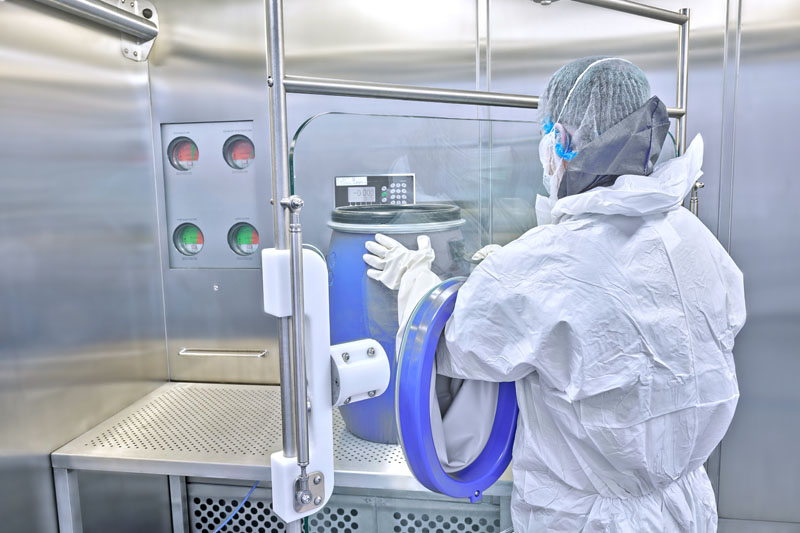
- Earlier and deeper technical planning: Ultra-potent assets require genuine high-containment manufacturing. Many HPAPI-labelled sites were built for mid-range potency and lack the rigid-wall isolators, closed transfers, engineered airflow and segregation required for submicrogram OELs. This only becomes clear during a detailed risk assessment.
- Heightened analytical demands: Cleaning validation, environmental monitoring and residue analysis must operate at significantly lower detection limits. Achieving this requires early analytical development, highly sensitive methods and specialised expertise — often earlier than sponsors anticipate.
- Narrower process windows and increased cost: These molecules frequently require micro-batches, bespoke and miniaturised equipment, and a greater degree of automation to maintain containment and ensure dose uniformity. The combination of strict containment, analytical sensitivity and reduced operational flexibility increases complexity and cost, particularly for small organisations.
- Higher regulatory and reputational stakes: A containment failure involving an ultra-potent compound can have serious consequences. Developers must understand a CDMO’s OEB assignment process, containment-verification history and environmental-monitoring performance before selecting a partner.
Even if the terminology is informal, an ultra-high potency designation shapes formulation decisions, containment strategy and programme feasibility from the earliest stages.
What it means for CDMOs
For CDMOs, this terminology underscores a widening capability gap. True ultra-high potency capability rests on four critical foundations.
- Capability transparency: Stating HPAPI capability is no longer sufficient. Sponsors expect clarity about which OEB bands a facility can support, how containment levels have been verified and how often they are retested.
- Robust, validated infrastructure: Facilities handling ultra-potent assets require isolators that are tested to extremely low OELs, integrated and automated material transfers, engineered containment systems and continuous particulate monitoring, all backed by rigorous maintenance and periodic reverification.
- Advanced analytical infrastructure: Operating at these potency levels demands analytical methods with exceptionally low limits of detection and the expertise to develop and validate them.
- Specialised workforce and culture: Extreme potency handling requires disciplined training, a deep understanding of toxicology and a culture in which deviation-free execution is the norm. This expertise remains rare and is decisive.
CDMOs capable of supporting early stage work, scale-up and clinical supply at validated OEB 5–6 levels will play an increasingly central role as the global drug development pipeline continues to shift toward these ultra-highly potent products.
A lexicon evolving with the science
Ultra-high potency is not a regulated designation, nor does it need to be. Its value lies in acknowledging that the traditional HPAPI label no longer captures the full potency spectrum.
Used carefully, it helps to distinguish between classical highly potent APIs and molecules that demand significantly more advanced containment … and it guides sponsors toward partners who are capable of safely managing them.
Ultimately, terminology matters less than capability. But as modern drug development continues to push into the uppermost potency bands, a more nuanced vocabulary helps the industry to align expectations, assess risk and make informed decisions.
The emergence of “ultra-high potency” is best understood not as unnecessary terminology or trend but as a reflection of scientific progress.
In short, it’s a prompt for clearer, more precise conversations about potency, risk and the future of advanced small-molecule manufacturing.