

Transitioning from a decade-long career as a primary school teacher to CEO of a pharma start-up, Leah Fletcher (pictured) had an unlikely start in the pharmaceutical sector.
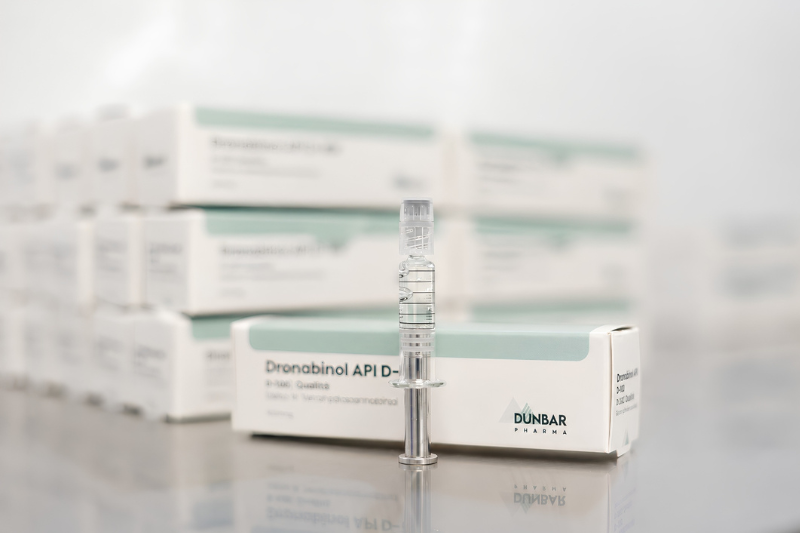
But 3 years after founding Dunbar Pharma, her Athlone-based company is EU GMP-certified, commercially manufacturing plant-derived dronabinol API and has just struck a UK supply deal with Specials manufacturer IPS Pharma — the firm’s second major European market in less than a year.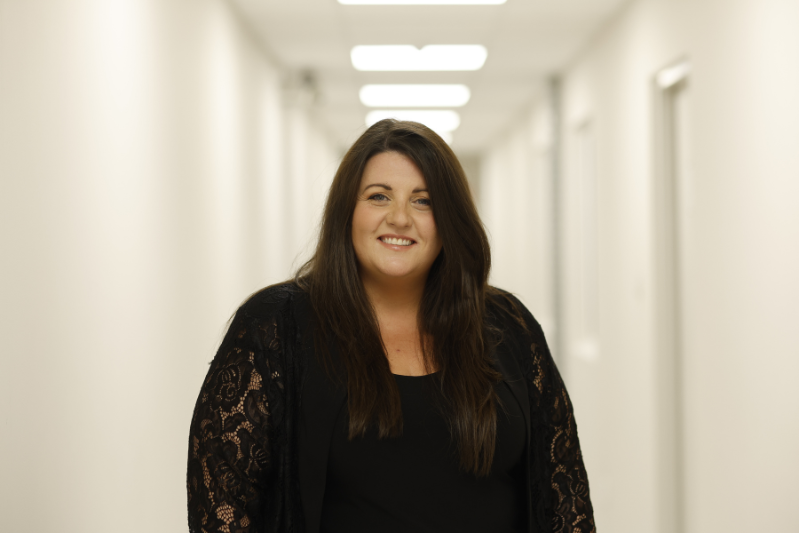
Fletcher’s interest in the industry was sparked after nearly 10 years spent teaching in Canada and Ireland, before proximity to Canada's 2018 cannabis legalisation changed her trajectory. Living in downtown Vancouver, she watched as an entire regulated industry sprang up almost overnight.
What crystallised the idea of building a company, though, was a story much closer to home: an Irish mother fighting for standardised cannabis access for a child with drug-resistant Dravet syndrome, sent home with no route to the medicine she needed.
"There was a huge push towards people setting up businesses, technology being developed and regulatory pathways being formed in different parts of the world," Fletcher says of the Canadian scene at the time.
She identified a structural gap: nobody had built genuine pharma-grade infrastructure for cannabinoid API that was capable of servicing the strictest clinical trial applications. Ireland, with its dense concentration of multinational pharma manufacturing (she cites Jazz Pharmaceuticals, Novo Nordisk, Alexion and AstraZeneca as neighbours in the same regulatory tier), looked like the obvious base … plus it had EU GMP export credentials included.
Three hurdles in order of difficulty
Fletcher ranks Dunbar's early challenges as follows: regulatory groundwork first, funding second, recruitment third. The first was complicated by the timing of the COVID-19 pandemic. "Regulators don't want to talk to you about your cannabis company when they're in the middle of a pandemic," she says about navigating Irish approval through lockdowns.
Funding followed in January 2023, which was deliberately sourced from Irish investors "that would add value to the business" rather than the Canadian cannabis capital that was more readily available at the time.
Recruitment proved a larger problem than the first two: attracting senior pharmaceutical talent to a cannabis start-up run by a former teacher is not easy. Fletcher succeeded nonetheless, hiring a director of quality who previously handled QP releases for Jazz Pharmaceuticals, a director of operations from Alexion and staff with Pfizer backgrounds.
She explained that her experience as a teacher helped, allowing her to bring together specialists from different fields and companies and help them to communicate in a language they could all understand.
Once I have highly educated experts around me, I'm the translator between those experts — that's how I see my role.
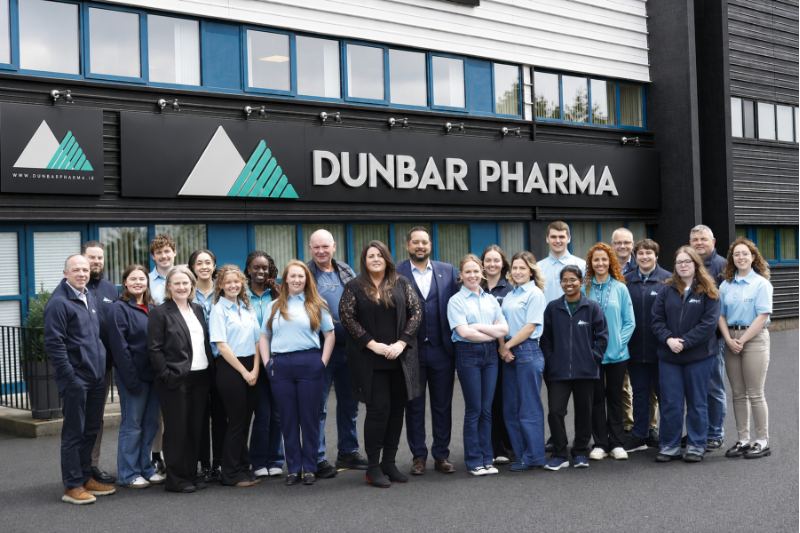
It's a framing that also explains her account of the firm's culture: Dunbar's first hire was her father, an electrical contractor with a pharma background, who quit his job on a phone call and started the next day. Her mother is also the company secretary. Rather than Big Pharma, they’re "Family Pharma," as Fletcher puts it.
Chemistry is the unglamorous hard part
When asked about what's difficult about cannabinoid manufacturing, Fletcher points to the laboratory.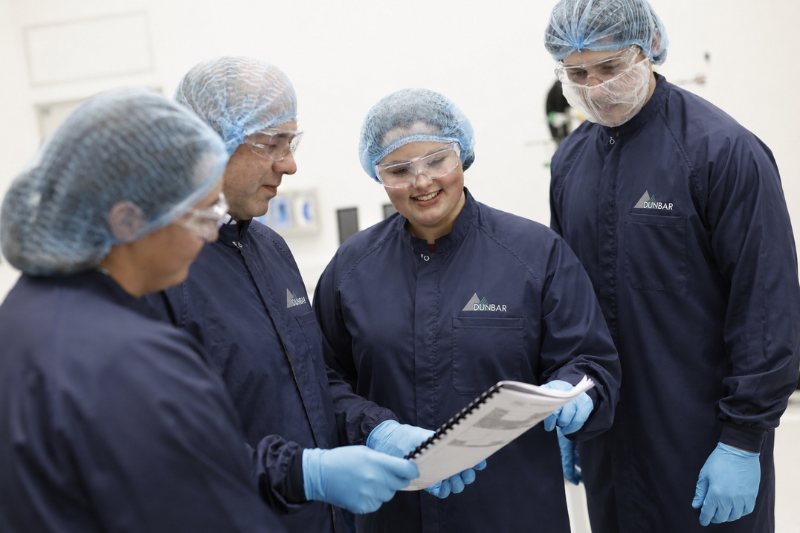
She describes an industry-wide problem that gets little airtime: cannabinoid reference standards are scarce and expensive, discouraging the deep analytical characterisation the sector needs. Sampling also adds further uncertainty, with batch results taking up to 2 weeks to return, by which point a certificate of analysis may already be out of step with material that has since travelled, in some supply chains, thousands of miles.
Minor cannabinoids fare worse still. "Markets aren't calling for it, therefore the analytical labs and the providers aren't diving into that science," Fletcher says of compounds such as CBN and Delta-8. This gap, she explains, is what Dunbar's full-panel API testing is built to close for future clinical trial sponsors.
Why plant-derived, not synthetic?
Fletcher says Dunbar's decision to manufacture from plant starting material rather than synthesise dronabinol chemically was a deliberate bet against an already-strained supply model. For example, the US is currently facing shortages of synthetic dronabinol products.
Synthetic production, she argues, is "a multi-day process that has a high failure rate," while European regulatory direction has moved toward plant-based products, with Germany having built its own plant-based dronabinol monograph more than a decade ago. There was also a sustainability dimension to the decision: Fletcher wanted a sustainable process that "didn't kill the birds and the bees."
The Specials route and what comes after it
Dunbar's UK entry via the Specials pathway, rather than pursuing full MHRA marketing authorisation outright, was a commercial calculation as much as a regulatory one. "There's a market there … with patients that can be served right now," Fletcher says, contrasting the cost to patients of existing licensed options with what a Specials-supplied product can offer.
She's clear that Specials is a means, rather than an endpoint:
There is, and there should always be, the goal to get your product listed and authorised ... to have it as a finished medicine. But everything takes time.
 She's also candid about the political backdrop, noting she hasn't seen much appetite from the current UK government to reform medical cannabis policy and argues the responsibility partly sits with companies such as hers to supply regulators with the molecule characterisation data needed to justify change. The UK's Advisory Council on the Misuse of Drugs review of the medical cannabis and Specials framework was due this summer, but remains outstanding.
What's next
Fletcher is targeting one additional new European market by the end of next year, with Poland under consideration, while keeping manufacturing, quality control and R&D in-house rather than outsourcing to CDMOs. She explained that this was a structural choice, framing it as a competitive advantage for a business still small enough to control its own supply chain end-to-end. Commercial expertise, in contrast, she's happy to leave to partners such as IPS Pharma in the UK and established distributors in Germany.
Asked where she sees herself and the company in 3–5 years, Fletcher doesn't reach for a growth target, instead saying that she’d like to bolster the team around her.
One of my major goals is that my entire team continue to be A players as we grow and expand into our new markets.


