

ICH stability timelines encourage conservative primary packaging specification.
Both the U.S. Food and Drug Administration (FDA) and the European Medicines Agency (EMA) follow ICH stability guidelines as part of Common Technical Document submissions.2, 3 Under ICH Q1A(R2), stability data must be generated using the final container-closure system intended for commercialisation. Blister packs must be stored in specified conditions, with a minimum of 6 months of stability performance data mandated at submission, continued for the duration of the intended shelf life.
Manufacturers therefore face a practical challenge. Stability data takes months to generate. That means packaging specifications must often be fixed before long-term shelf-life performance is fully understood. Unsurprisingly, teams specify conservatively.
| Study | Storage condition | Minimum time period covered by data at submission |
|---|---|---|
| Long term | 25°C ± 2°C/60%RH ± 5%RH or 30°C ± 2°C/65%RH ± 5%RH | 12 months |
| Intermediate | 30°C ± 2°C/65%RH ± 5%RH | 6 months |
| Accelerated | 40°C ± 2°C/75%RH ± 5%RH | 6 months |
For generic products, launch timing is critical.
According to the European Commission's Pharmaceutical Sector Inquiry, generics enter the market at approximately 25% below originator prices, and fall to approximately 40% below after two years.4 Being among the first generic entrants therefore carries significant commercial value, creating strong pressure to avoid development delays.
Under these conditions, packaging development teams are naturally incentivised to minimise stability-related risks.5
- High-barrier materials are low-risk options for new drug launches, as product stability across the shelf life is not well established.
- For generic and hybrid products, packaging configurations established by the innovator present a more reliable path to approval, because they have already demonstrated product stability across the shelf life.
Launch timelines and commercial realities thus incentivise selecting the highest barrier specification that can reasonably be justified.
EU’s PPWR will raise the cost of packaging over-specification.
The EU’s Packaging and Packaging Waste Regulation (PPWR 2025/40) will formalise recyclability-based economic incentives that currently only exist in some individual member nations. Germany (VerpackG), France (AGEC) and Belgium (Cooperation Agreement) already require producers to fund schemes that manage the packaging they place on the market.
- PPWR applies to all packaging regardless of sector (Article 2).6
- Extended producer responsibility (EPR) fees will be recovered from pharmaceutical marketers to fund packaging waste management infrastructure.
- Under Article 45, these fees will be eco-modulated, so packaging that is difficult to recycle will attract higher fees than more recyclable packaging.
- Several of the recyclability criteria are directly relevant to pharmaceutical blister packs. However, pharmaceutical packaging is exempt from minimum recycled content mandates under Article 7.
PPWR Article 6: non-exhaustive list of parameters for setting design for recycling criteria
| Parameters for design for recycling criteria | Parameter’s relevance |
|---|---|
| Additives | The presence of additives in the packaging containers can result in incorrect sorting of the packaging materials during the sorting process and can contaminate the obtained secondary raw materials. |
| Adhesives | Adhesives can be used in such a way that they can be easily separated in the recycling process or by the end user or in a way that they do not affect the efficiency of the sorting and recycling processes. The presence of adhesive residues on the packaging can downgrade the quality (purity) of the secondary raw materials. |
| Material composition | Use of mono-materials or material combinations that permit easy separation and ensure high yield of secondary raw materials is preferable. |
| Barriers / coatings | The presence of barriers or coatings within the packaging can make recycling more difficult. Combinations that ensure high yield of secondary raw materials are preferable. |
| Inks and lacquers / printing / coding | The use of inks with substances of concern hinders recycling, as those packaging units cannot be recycled. Printing inks when released can contaminate the recycling stream through the washing water. Likewise, printing inks which are not released can impair the transparency of the recycling stream. |
| Product residues / ease of emptying | Residues of the content of the packaging can affect the sortability and the recyclability of the packaging. The design of the packaging should enable the easy emptying of its content and when disposed of should be in a fully drained condition. |
| Ease of dismantling | Components that are firmly attached to each other can affect the sortability and the recyclability of the packaging. Packaging design can facilitate the possibility of separating different components into different material streams. |
Pharma companies now face two competing objectives. Blister packaging specifications have always been selected early enough to support stability submissions and launch timelines. But now, material over-specification can influence recyclability and EPR costs throughout the product life cycle.
For manufacturers supplying European pharma clients, the direct EPR obligation sits with the pharmaceutical marketer rather than the supplier. However, European marketers subject to PPWR obligations will increasingly scrutinise packaging specifications, material choices and recyclability performance when evaluating supply partners.
Barrier needs are affected by upstream manufacturing processes.
Understanding how a drug substance interacts with moisture is fundamental to packaging development, because moisture uptake can contribute to physical and chemical instability.7 Light and oxygen can also be potential factors that need consideration.
However, the required level of barrier protection is not determined by API properties alone. Manufacturing process-related factors can also influence packaging requirements.
Waterman's widely cited Accelerated Stability Assessment Program (ASAP) model shows that final product moisture content affects the level of barrier protection needed.8
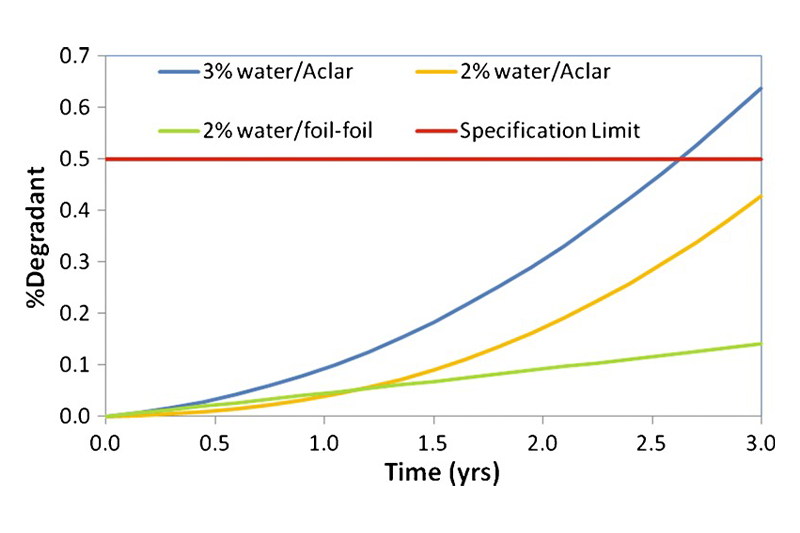
For example:
- The model demonstrated that a tablet with 3% moisture content required cold-formed Alu-Alu foil packaging to achieve a 3-year shelf life under 30°C / 75%RH storage conditions.
- Reducing moisture content to 2% allowed the same shelf life to be achieved using a lower-barrier Aclar® blister packaging instead.
Residual moisture content is established upstream through formulation and process development decisions for granulation, drying and coating. So, opportunities to reduce packaging and EPR costs may be leveraged or lost long before packaging development begins.
For manufacturers supplying European clients, this means formulation and process decisions made months before packaging is specified can directly affect their customers' PPWR obligations. Stability also determines the shelf life that can be supported in the regulatory submission. An extended shelf life reduces expiry risk and helps pharmaceutical marketers maximise product availability across distribution networks.
Packaging material selection is one of the biggest determinants of barrier performance.
In a study of a moisture-sensitive pharmaceutical compound, Allinson et al. reported a 259-fold difference in moisture permeation between thermoformed PVC and cold-formed aluminium blisters.1
Predictive and mechanistic models to pre-assess shelf stability have been available for more than a decade,8 and new models are continually being developed.9 Regulatory approval still requires conventional stability programmes, meaning these tools complement rather than replace established development pathways.
Their value lies in informing specification decisions before long-term stability outcomes are available. They help development teams converge on packaging specifications that satisfy stability requirements while avoiding unnecessary EPR costs.
Thermoforming / sealing variables influence the barrier protection ultimately delivered.
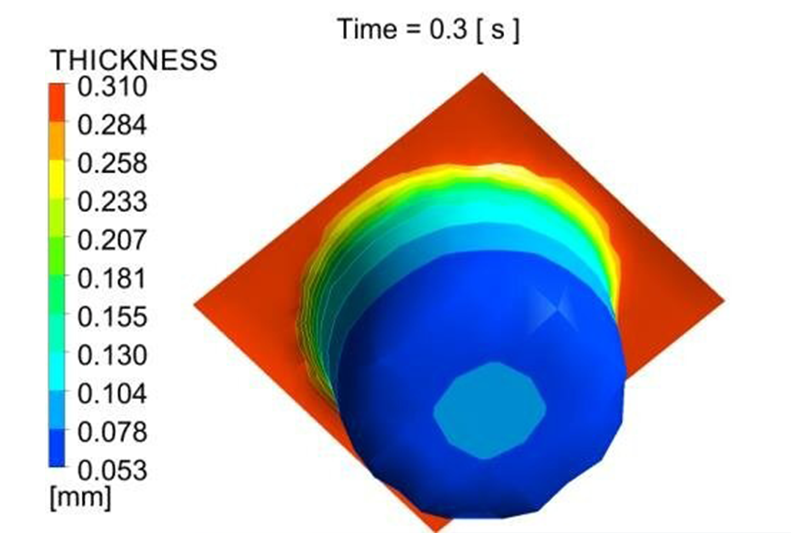
Specified barrier performance and realised barrier performance are not the same thing. Research on pharmaceutical PVC films found that cavity geometry, corner radius and draft angle all influenced local thickness distribution.10
- During thermoforming, the material is stretched unevenly throughout the cavity.
- The film becomes progressively thinner from the top of the cavity to the bottom, with the bottom of the cavity less than 20% of the original thickness, depending on mold radius and forming variables.
- Consequently, the barrier performance assumed during specification may differ from the barrier performance ultimately delivered at commercial scale.
Even after the cavity is formed, sealing variables remain critical. A doctoral thesis study conducted at the University of Loughborough identified that the most important aspect of blister packaging was the function of the adhesive in sealing.11 Sealing temperatures, pressure and dwell times were identified as critical parameters to prevent delamination and moisture ingress.
Shelf-life stability therefore depends on both the selected material and the effectiveness with which it is formed and sealed. A specification that looks optimal on a datasheet can arrive at commercial scale under- or over-specified. Those performance gaps, once locked into an approved dossier, carry EPR cost implications for the lifetime of the product.
Optimal blister packaging specification is a cross-disciplinary activity.
- API sensitivity establishes the stability challenge. Formulation, granulation, drying and coating influence residual moisture levels.
- Packaging materials determine the available barrier performance. Blister forming and sealing conditions affect the barrier performance ultimately delivered.
- Combined with commercial pressures to launch early, regulatory stability timelines encourage conservative packaging choices.
- The EU’s PPWR increases the cost of those choices throughout the product life cycle.
Therefore, the greatest opportunities to optimise blister packaging may be upstream in formulation and process development.
Manufacturers who approach formulation, process development and packaging as an integrated system will be better positioned to balance stability requirements, launch timelines and packaging-related EPR costs for themselves or their customers.
We can help you optimise your blister packaging.
Because packaging performance is shaped by decisions made across formulation, process development and packaging, solving the challenge requires expertise that spans all three.
For decades, ACG has provided integrated manufacturing technologies across granulation, drying, coating and blister packaging. Our Laboratory for Process Development has helped develop and commercialise processes for 3,500+ OSD formulations.
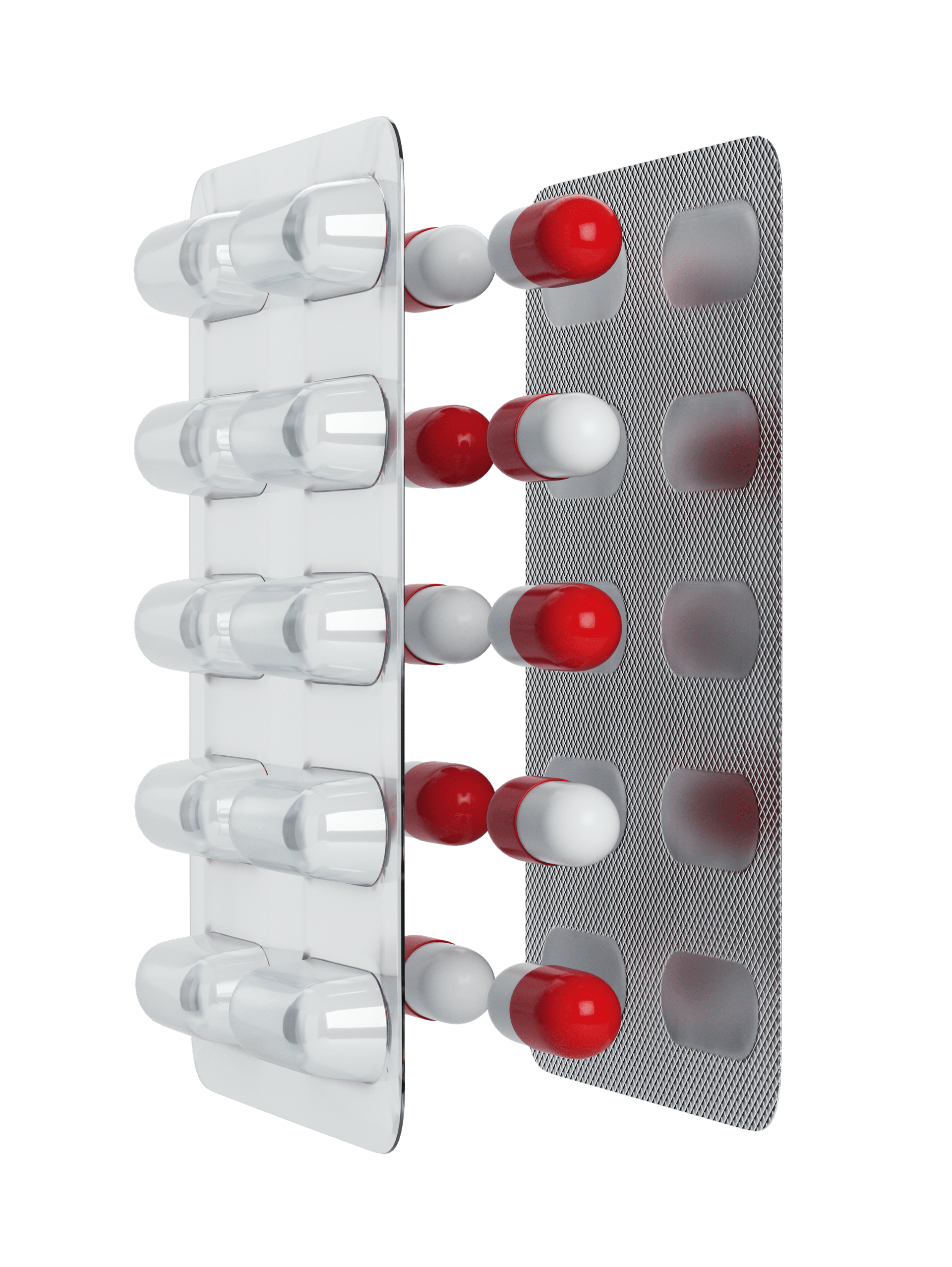
Alongside our process expertise, our blister packaging portfolio includes sustainable materials such as SuperPod (cold-form foil with enhanced formability to reduce blister pack size and packaging footprint), and RecycloPod (our mono-material blister system developed for recyclability).
Because we engineer both the manufacturing processes that influence barrier requirements and the packaging materials that deliver them, we help manufacturers optimise blister packaging as part of the entire product development process – not as an isolated packaging decision.
So, we can help you achieve an appropriate balance between product stability, manufacturability, recyclability and lifetime cost. Get in touch with us to learn how we can support you: https://www.acg-world.com/contact
References:
- https://pubmed.ncbi.nlm.nih.gov/11397566/
- https://database.ich.org/sites/default/files/Q1A%28R2%29%20Guideline.pdf
- https://www.ema.europa.eu/en/documents/scientific-guideline/ich-q-1-r2-stability-testing-new-drug-substances-and-products-step-5_en.pdf
- https://competition-policy.ec.europa.eu/document/download/222a1102-c362-4146-ba17-e6daec8a1637_en?filename=pharmaceutical_sector_inquiry_factsheet_1_prices_time_to_generic_entry_and_consumer_savings.pdf
- https://www.packagingdigest.com/packaging-technologies/conducting-a-successful-stability-study-for-blister-packaging
- https://eur-lex.europa.eu/legal-content/EN/TXT/HTML/?uri=OJ:L_202500040
- https://pubmed.ncbi.nlm.nih.gov/17630643/
- https://pmc.ncbi.nlm.nih.gov/articles/PMC3167263/
- https://pmc.ncbi.nlm.nih.gov/articles/PMC12473751/
- https://www.researchgate.net/publication/318922393_Study_on_thickness_distribution_of_thermoformed_medical_PVC_blister
- https://repository.lboro.ac.uk/articles/thesis/A_critical_assessment_of_factors_effecting_blister_pack_formation_in_the_pharmaceutical_industry/9230174?file=28745277