

Isotope refinery, cold chain M&A and DARPA deals: pharma finance roundup

From a £10m isotope refinery raise to Copeland's Dickson acquisition and a $14m DARPA-backed red blood cell programme, here is this week's biggest pharma manufacturing and life sciences funding news

Isotope supply gets a manufacturing fix

UK deep tech company StandardX has raised £10m in seed funding, led by Vsquared Ventures and East X Ventures, to build what it calls the world's first scalable isotope refinery.Isotope refinery, cold chain M&A and DARPA deals: pharma finance roundup
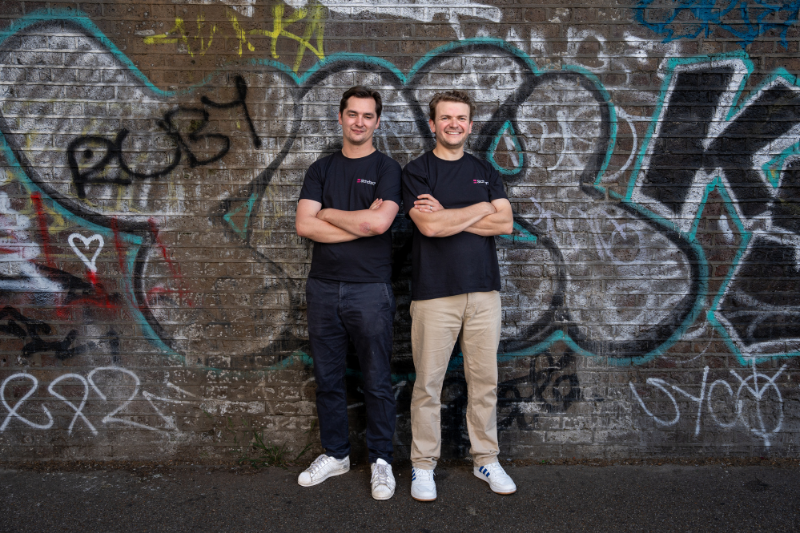
The London-headquartered firm says its accelerator-based system can manufacture a full portfolio of isotopes at commercial scale from a standard industrial footprint — a direct response to a supply chain that is currently fragmented and reliant on ageing infrastructure.

For manufacturers, there is a real pinch point here: isotope shortages have already paused or delayed clinical trials for targeted alpha therapies across the UK and Europe.,

StandardX plans to supply its first isotopes to a medical research partner in 2027, with industrial-scale production targeted from 2029.

Longer term, the same platform is earmarked for tritium production to support fusion energy developers — a reminder that critical materials manufacturing is increasingly a cross-sector play.

Cold chain intelligence consolidates

Compression and controls giant Copeland has completed its acquisition of Dickson, a Chicago-based environmental monitoring and compliance technology provider serving regulated life sciences and healthcare environments.Isotope refinery, cold chain M&A and DARPA deals: pharma finance roundup

The deal combines Dickson's cloud-native monitoring platform with Copeland's controls and enterprise software, aimed at giving manufacturers continuous visibility from production through to patient delivery.

With regulatory scrutiny of temperature-sensitive product handling only increasing, this consolidation move is worth watching: it signals that investment is shifting toward end-to-end cold chain compliance rather than point-solution monitoring.

UK distribution changes hands

Duke Street has sold Kent Pharmaceuticals, a speciality and generic pharmaceuticals distributor and a top supplier of injectables to UK hospitals, to Phoenix Labs, expanding the Irish player's UK footprint.

Isotope refinery, cold chain M&A and DARPA deals: pharma finance roundupDuke Street had owned Kent Pharma since 2019, having carved it out of DCC Healthcare and used the holding period to diversify the portfolio, expand into Ireland and divest the non-core Athlone Labs manufacturing site in 2025.

The firm says the exit continues its pattern of selling to strategic trade buyers rather than financial ones.

Cell manufacturing draws fresh capital

Bristol-based Scarlet Therapeutics has secured a DARPA agreement worth up to $14m to develop "smart" red blood cells capable of sensing and responding to physiological changes.Isotope refinery, cold chain M&A and DARPA deals: pharma finance roundup

The company will lead a consortium including the University of Bristol, Northwestern University and Unicorn Biotechnologies, with the work also aimed at advancing automated cell manufacturing capabilities more broadly.

Separately, Belgian regenerative medicine company Novadip has closed €10.4m in convertible financing — taking total funding since June 2025 to €20m — to complete a pivotal Phase III trial of its autologous cell therapy NVD003 in congenital pseudarthrosis of the tibia.

The raise also unlocks the final tranche of an €18m European Investment Bank loan, with market authorisation targeted for 2028.


In brief

  • AI-based drug developer Basecamp Research raised $140m in a Series C round valuing the London company at $800m, with backers including Nvidia and Anthropic's Anthology Fund, to advance its EDEN biological foundation models.
  • New Orleans-based Informuta landed an NSF SBIR Phase II grant worth $1.25m to move its antibiotic resistance forecasting platform toward hospital deployment.
  • Additionally, AstronauTx received funding from the Michael J. Fox Foundation and Parkinson's UK to explore sleep-based treatment approaches for Parkinson's disease.

The bigger picture

Taken together, this week's deals point to investors backing infrastructure as much as innovation — refineries, cold chain platforms and manufacturing capacity alongside the usual clinical-stage bets.

For an industry under pressure to secure supply chains for rare materials and temperature-sensitive products alike, that's arguably where the more consequential long-term value is being built.

You may also like