

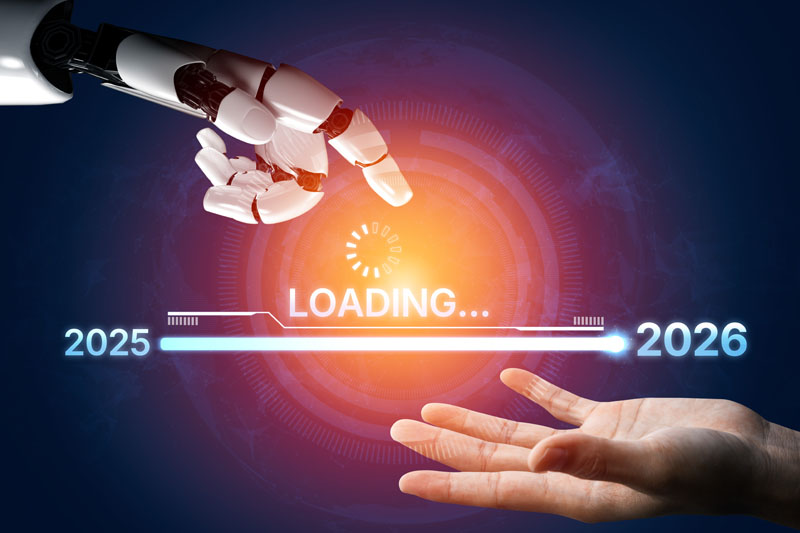
As the pharma and biotech industry enters 2026 amid major shifts in investment patterns, global innovation hubs and the rapid integration of AI across the value chain.
Talking to Manufacturing Chemist (MC) Andy Lewis (AL), Chief Scientific Officer at Quotient Sciences, shares their perspective on the key trends, challenges and opportunities shaping the years ahead.
MC: Looking back, what were the most significant industry shifts or developments in 2025?

AL: As we come to the close of 2025, the pharmaceutical and biotech industry looks to be undergoing a profound transformation driven by scientific innovation, digital integration and global dynamics.
Biotech venture capital funding continued the trend of fewer but larger investments … with several companies raising “megarounds” in excess of $100 million.
This has caused a structural shift in the wider biotech ecosystem, which may be felt for some time.
In addition, and of particular note, has been the rise of the Chinese biotech industry, with approximately 40% of the drugs in-licensed by pharmaceutical companies this year being discovered in China.
Already a significant player in the CDMO space, it is now a significant force in biotech innovation. Plus, more clinical trials were started in China this year than in any other country, overtaking the US for the first time.
Above all, though, 2025 will be remembered as the year of digital integration.
AI has been used for years in drug discovery, but 2025 saw it find multiple applications throughout the drug development value chain — from optimising clinical trial design and delivery to medical writing, manufacturing and supply chain planning.
The potential for AI to streamline and improve the drug development process is immense. And although it has been many years in development, 2025 has felt to me to be the year it started to really come to fruition.
MC: What trends or challenges are you preparing for in 2026?
AL: I expect 2026 to see continued growth in the applications of AI, such as accelerating drug development.
At Quotient, we have just announced our strategic partnership with Intrepid Labs, continuing our longstanding collaboration in applying AI to drug product development.
Our work to date has shown that it can reduce formulation development times by 30–50%, decrease API demand in early development, and build an in silico model of the impact of changes to a formulation on performance.
Throughout 2026, we will continue to develop the capability and applications of AI, applying it during live drug development programmes with our clients.
For more in this series
• Biologics at a turning point: complexity, AI and the road to 2026
• When science meets security: the future of small molecule outsourcing
• Beyond the portal: building the digital foundations for global CGT delivery