

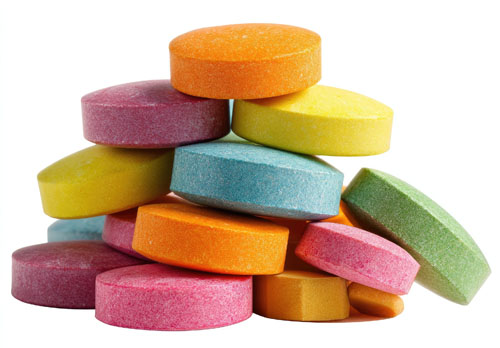
By adding colour, gloss and branding appeal to plain dosage forms, tablet coatings have long served as the pharmaceutical industry’s aesthetic touchpoint.
In today’s landscape, wherein patient-centricity, regulatory scrutiny and environmental responsibility converge, coatings are strategic tools that go beyond visual appeal.
Damian Hernandez, General Manager, Film Coatings at Colorcon, reports.
Functionality is at the core of this transformation. Modern coatings play a crucial role in both drug delivery and stability.
Advances in polymer science have enabled pH-responsive coatings that release active ingredients in specific regions of the gastrointestinal tract. This targeted delivery enhances therapeutic efficacy and minimises side-effects.
Coatings also improve the patient experience by making tablets easier to swallow, reducing oesophageal transit time and minimising mucosal irritation, which is especially important for elderly and chronically ill patients.
Taste-masking and odour barriers further increase acceptability, particularly in paediatric and nutraceutical applications.
Next-generation formulations facilitate coating processes at reduced temperatures and under low-moisture conditions, thereby minimising stability related degradation.
Combined with recent advancements in formulation science, these innovations provide enhanced protection of the active pharmaceutical ingredient (API) during coating and throughout the product’s shelf-life.
From a manufacturing perspective, tablet coatings enhance product robustness, reduce dust generation and support faster processing.
Coating technologies have evolved from manual, craft-based methods to controlled, reproducible processes that deliver consistent results while still leveraging operator expertise.
Today’s advanced systems allow flexibility in process parameters without compromising uniformity at different scales.
Although sometimes viewed as an added step or cost, applying a coating can ultimately improve operational efficiency and reduce overall manufacturing expenses.
Recent advances now allow microscopic taggants to be integrated into film coatings, providing a unique identifier directly on the dosage form.

Although serialisation helps to track products through the supply chain, it does not fully prevent counterfeiting or falsification. On-dose authentication adds an additional layer of security by enabling verification at the unit level, supporting patient safety and supply chain integrity.
Commercially, tablet coating plays a vital role in brand differentiation by leveraging both colour psychology and visual design to create a memorable product identity.
Studies show that colour not only influences consumer perception of a tablet’s effectiveness but can also evoke specific emotional responses, thereby increasing trust and appeal.
This makes coatings a powerful asset when it comes to enhancing consumer engagement and driving purchasing decisions.
Regulatory landscapes are also shifting. The European Food Safety Authority’s withdrawal of titanium dioxide as a food additive has prompted dietary supplement manufacturers to seek alternative opacifying agents.
Similarly, talc is under scrutiny and a potential ban could force manufacturers to reformulate. At the same time, clean-label excipients are gaining traction in the OTC and nutraceutical sectors as consumers demand naturally derived ingredients.
As companies face increasing pressure from consumers, regulators and global sustainability initiatives, environmentally responsible choices are becoming essential.
Coatings that require less solvent, shorter processing times or reduced energy consumption not only minimise the environmental footprint but also enhance operational efficiency and reduce costs.
Additionally, the shift towards natural materials supports circular economy goals and aligns with growing environmental, social and governance (ESG) priorities.
Tablet coatings are no longer superficial; they’re integral elements of modern drug formulation.
They enhance therapeutic performance, improve the patient experience, streamline manufacturing and support sustainability.


