

Pharmaceutical manufacturing is becoming more specialised. Clinical studies, orphan drugs, personalised medicines, market-specific presentations, stability work, and specialist products are all increasing demand for smaller blister runs.
That creates a practical packaging challenge. A manufacturer may only need a limited number of blister packs, but the work still has to be suitable for a regulated environment. The batch may be small, but it may still need approved settings, material details, operator records, QA review, and evidence that the process was carried out as intended.
This is why low-volume blister packaging should not be treated as a simple sample-making exercise. The pack itself matters, but so does the information created around it.
Small does not mean informal
Small-batch work often needs flexibility. Teams may be changing materials, tooling, formats, sealing conditions, or sample quantities as a product moves through development, clinical supply, stability work, or specialist production. That flexibility is useful, but it can create problems if the process becomes too informal.
A blister pack may look acceptable, but QA may still need to know how it was produced. Which material was used? Which settings were applied? Who carried out the work? Was the batch report complete? Can the result be reviewed later if a question arises?
Low-volume blister packaging equipment designed for regulated environments can help close that gap. For development, clinical, specialist, and low-volume commercial batches, it allows teams to produce useful packs while keeping the work structured enough for QA review.
Production-level thinking starts before the run
For smaller batches, production-level thinking does not necessarily mean using the same equipment, staffing, or throughput expectations as a high-volume commercial line. It means applying the same discipline to the questions that affect quality.
Before the run starts, teams need to understand the blister format, materials, product handling requirements, sealing conditions, and any documentation expectations linked to the batch. If the packs will be used for stability work, clinical supply, customer evaluation, or a market-specific presentation, the process needs to create enough evidence to support that use.
This is especially important when product availability is limited. Small batches often leave less room for avoidable rejects, repeated trials, or unclear records. A packaging issue in a small run can consume valuable product quickly, so the process needs enough structure to reduce uncertainty without removing the flexibility that low-volume work requires.
Data expectations are increasing
The data around a small batch can matter as much as the physical pack. Teams may need electronic signatures, batch reports, audit trails, electronic documentation, and links into wider manufacturing systems. These requirements are not limited to large commercial runs. They can also apply when a smaller batch is part of a regulated process.
Systems such as Sepha's EZ Blister+ are relevant here because they support low-volume blister packaging with the data controls expected in pharmaceutical manufacturing. The EZ Blister+ provides electronic signatures, batch reports, audit trails and electronic documentation to support operation within a 21 CFR Part 11-compliant environment.
The value is not only the ability to pack small quantities. It is the ability to produce small batches in a way that creates reviewable production data. The EZ Blister+ can also support a more scalable packaging pathway because development and low-volume work can use representative pharmaceutical blister materials and pack formats, helping teams reduce the disconnect between early packaging work and later manufacturing requirements.
That can be important when a stability batch raises a question, when a packaging trial is repeated, or when a product moves toward a more formal production route.
Better batch history supports better decisions
Good batch history helps teams make better decisions later. It can show material performance, sealing conditions, loading issues, reject patterns, product handling, and normal pack variation. That information may be useful for package integrity testing, investigations, scale-up, and waste reduction.
If the team understands how a pack was produced, it is easier to decide which quality checks are appropriate. If the batch records are clear, QA has a stronger basis for reviewing what happened. If the process data is incomplete, later decisions can become harder than they need to be.
This does not mean every small run needs the same level of control. A development trial may need a different approach from a clinical batch or a low-volume commercial run. The key is that the process should match the intended use of the packs.
The takeaway
Low-volume blister packaging is not simply about producing fewer packs. It is about bringing production-level thinking to smaller, more specialised batches.
As manufacturers handle a wider range of specialist products, market-specific packs and short commercial runs, the balance between flexibility and control becomes increasingly important. Smaller batches still need to produce evidence QA can use.
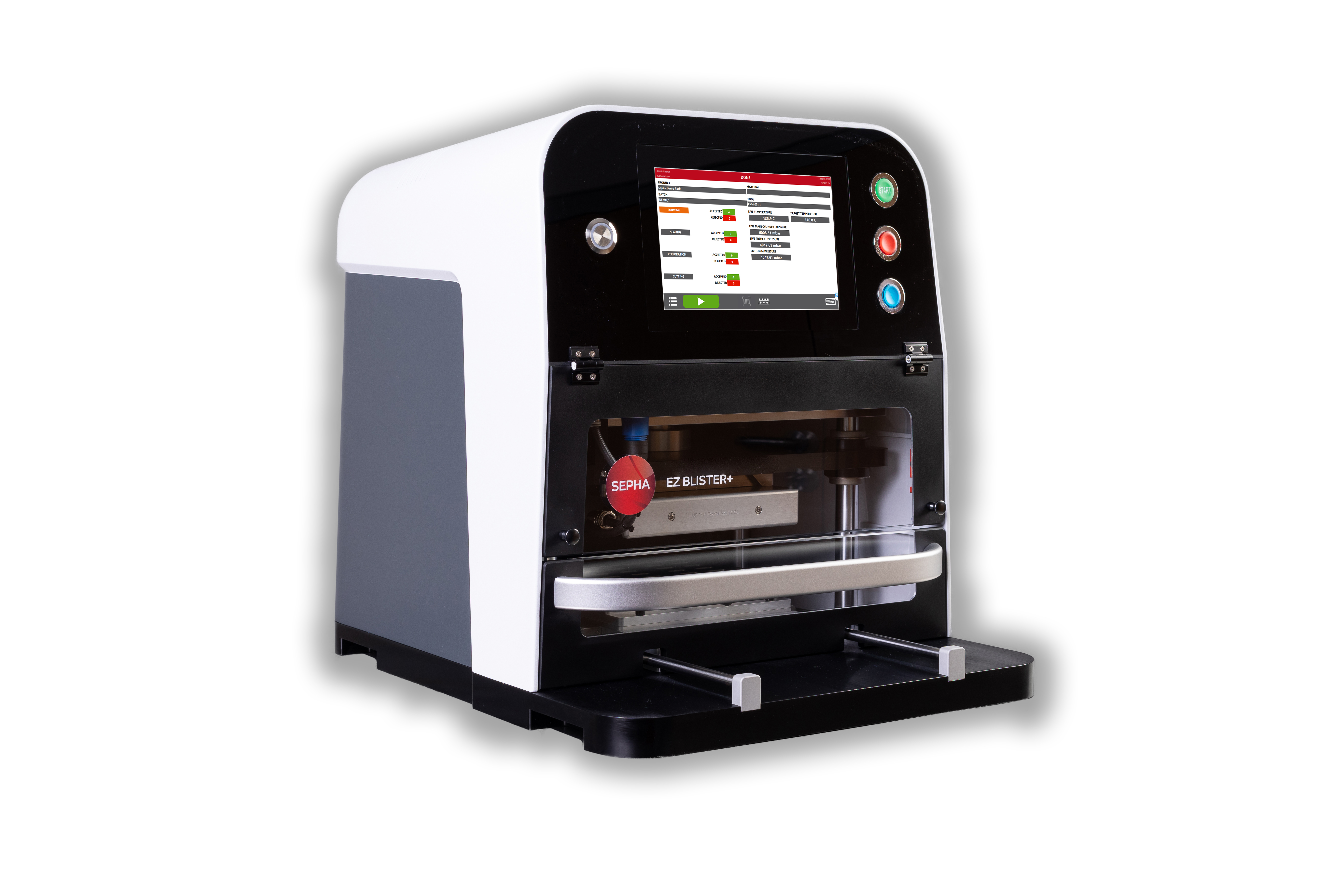
Sepha’s EZ Blister+ can form part of this approach by combining flexible, low-volume blister packaging with process controls and electronic records that support QA review and regulated production requirements.


