
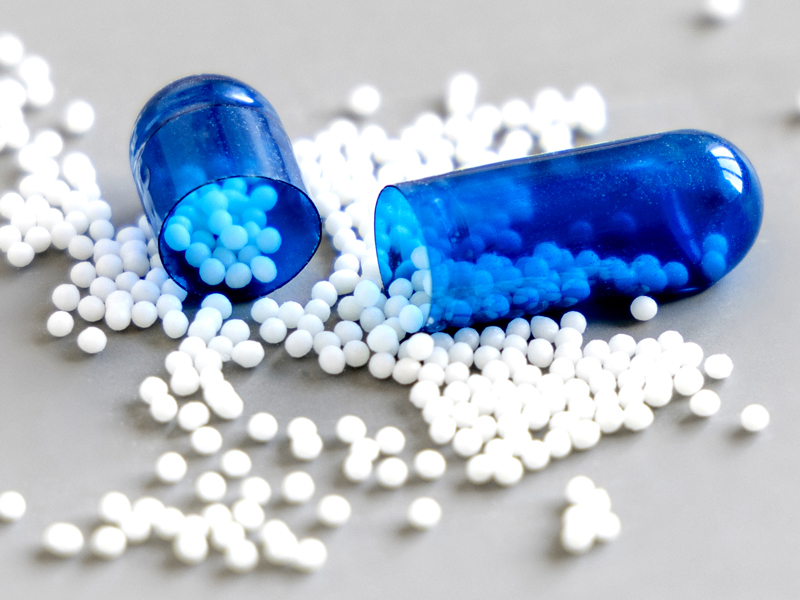
Owing to their convenience, stability and cost-effectiveness, oral solid dosage (OSD) forms continue to dominate the pharmaceutical market.
Within this space, drug-loaded pellets have gained increasing attention as manufacturers seek greater formulation flexibility, improved patient outcomes and more robust production processes.
Ideal for combination therapies, targeted delivery, controlled release and/or making poorly soluble formulations easier to handle, these tiny spherical particles offer benefits such as improved bioavailability, reduced irritation and high drug loading with fewer side-effects.
From single units to multiparticulates
Traditional tablets and capsules typically comprise single-unit dosage forms, meaning that the entire drug dose is contained in one discrete object.
Although well-established, this approach can present limitations, particularly for modified-release products, combination therapies or active pharmaceutical ingredients (APIs) with narrow therapeutic windows.
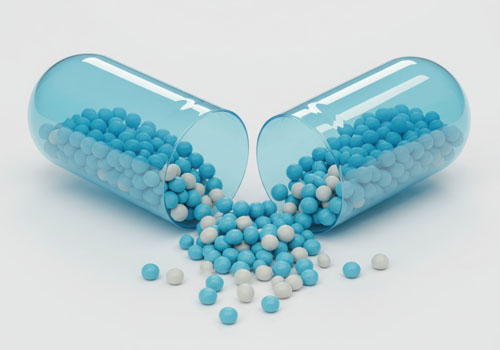
Drug-loaded pellets, by contrast, are multiparticulate systems made up of hundreds or thousands of individual units that contain a fraction of the total dose.
Once administered, these pellets disperse throughout the gastrointestinal (GI) tract rather than remaining as a single mass.
This fundamental difference underpins many of their therapeutic and manufacturing advantages and explains why pellets are increasingly used for controlled-release, enteric-coated and patient-centric formulations. 1,2
What are drug-loaded pellets?
Compared with drug-layering processes, drug-loaded pellets are typically produced by extrusion–spheronisation; a wet mass containing an API and excipients is extruded and subsequently rounded into spheres.
Unlike layered pellets, when the drug is sprayed onto inert starter cores, the API in drug-loaded pellets is incorporated directly into the pellet matrix. This allows for high drug loading, uniform distribution and robust mechanical properties.
Improved pharmacokinetics and reduced variability
One of the primary clinical benefits of drug-loaded pellets lies in their improved pharmacokinetic performance. Because pellets spread evenly along the gastrointestinal (GI) tract, drug absorption occurs across a larger surface area.
This can reduce inter- and intra-patient variability and produce smoother plasma concentration–time profiles.
For modified-release formulations, this distribution helps to minimise localised drug concentrations that might otherwise cause irritation, particularly with acidic or poorly soluble APIs.
In addition, the particulate nature of pellets significantly reduces the risk of dose dumping as the (potential) failure of a small number of units does not compromise the entire dose.
Flexible and sophisticated release profiles
Drug-loaded pellets offer exceptional flexibility in terms of release design. Each pellet can be coated individually using functional polymer films to achieve immediate, delayed, sustained or pulsatile release.
Enteric coatings can protect acid-sensitive APIs or delay release until the intestine, whereas sustained-release coatings can maintain therapeutic levels for extended periods.
A further advantage is the ability to blend different pellet populations in a single capsule or sachet.
For example, immediate-release pellets can be combined with sustained-release pellets to provide a rapid onset followed by prolonged action.
This approach enables sophisticated dosing strategies without increasing formulation complexity at the patient level.
High drug loading and combination products
Because the API is embedded throughout the pellet matrix, drug-loaded pellets can achieve higher drug loads than many layered systems.
This is particularly valuable for high-dose products wherein coating thickness or starter core size may otherwise become limiting factors.
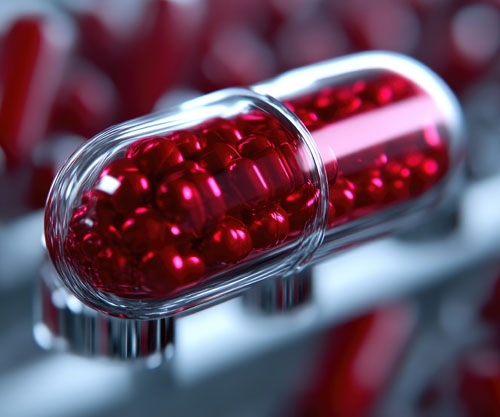
Drug-loaded pellets also facilitate fixed-dose combinations and products containing incompatible APIs. Separate pellet populations can be manufactured and coated independently, then filled together without risk of chemical interaction.
Stability and product protection
Embedding the API within a pellet matrix and applying functional coatings can significantly enhance product stability.
Pellets can be engineered to protect moisture- or light-sensitive APIs, whereas enteric or barrier coatings provide additional protection during storage and transit.
This inherent stability makes drug-loaded pellets well-suited to challenging APIs and supports global distribution under a wide range of climatic conditions.
Patient-centric dosage forms
Beyond manufacturing and pharmacokinetics, drug-loaded pellets enable patient-centric product design. Pellets can be filled into capsules, sachets or stickpacks, or supplied as sprinkle formulations for patients who have difficulty swallowing tablets.
Taste-masking coatings further improve acceptability, particularly for paediatric and geriatric populations.
The ability to tailor release profiles also supports once-daily dosing regimens, improving adherence and overall treatment outcomes.
Manufacturing advantages and process robustness
From a manufacturing perspective, pellets exhibit excellent flow properties, low dust generation and a narrow particle-size distribution.
These characteristics improve downstream processing during coating, encapsulation or compression into multiple unit pellet system (MUPS) tablets. 3
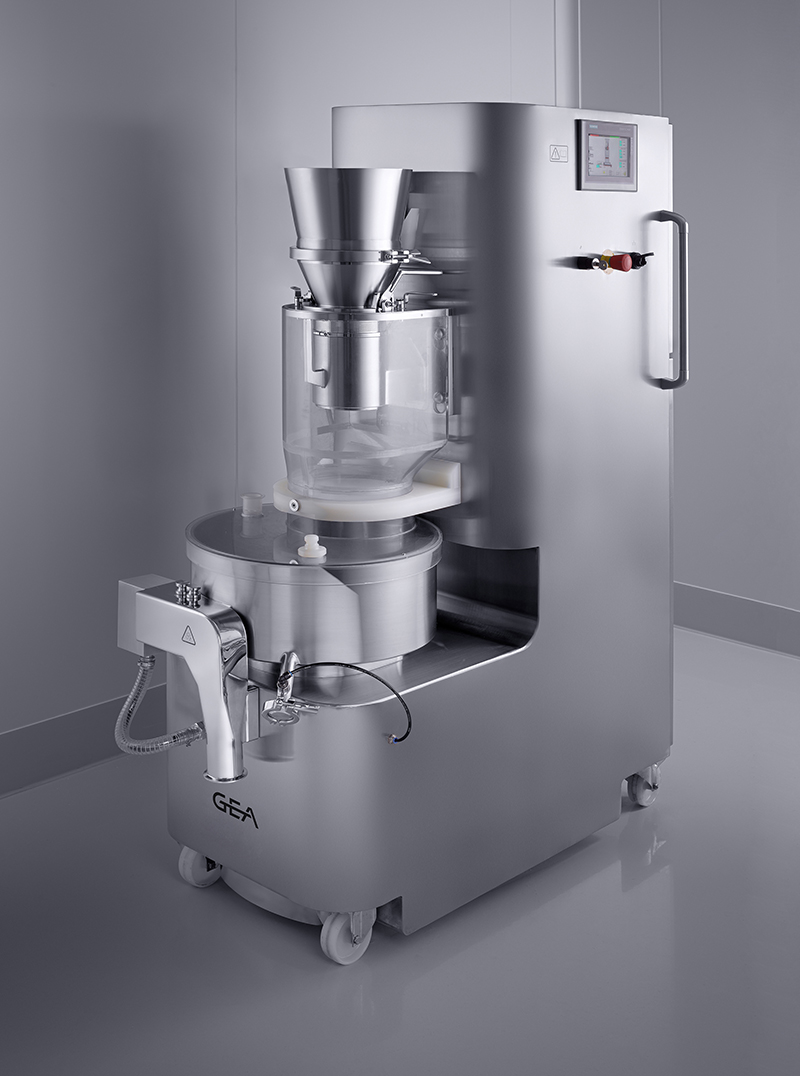
Advances in pelletisation technologies, such as the NICA system from GEA Pharma & Healthcare, are playing a central role by enabling this shift and offering scalable, reproducible routes to high-quality multiparticulate dosage forms.
The integrated and GMP-compatible NICA is a turnkey pellet production plant that combines an extruder, a spheroniser and a separate mixer/granulator in a single compact system. 4
Wet powders continuously flow through a low-shear radial extruder, after which the extrusions are fragmented and formed into pellets in the spheroniser. The process is fast, robust, continuous and easy to scale.
Mark Rowland, Director of Product Management, GEA Pharma Solids, comments: “Both standalone units and fully integrated systems are available, which can be combined with up- and downstream plant."
"In addition, very high drug loads can be processed. Reliably predictable pellet sizes of 0.5–1.5 mm can be achieved at capacities of up to 300 kg/h. This integrated approach supports consistent pellet quality at development and commercial levels while reducing processing steps and operator intervention.”
Parameters such as extrusion pressure, spheronisation speed and residence time can be tightly controlled, ensuring consistent pellet size, sphericity and density.
This level of control is vital for drug-loaded systems when content uniformity is critical.
In addition, the compact footprint and modular design of modern pelletisation units from GEA support efficient facility layouts and straightforward scale-up from pilot to commercial production, reducing development timelines and technology transfer risks.
Mark comments: “A modular approach, facilitated by platforms such as NICA, simplifies development and supports lifecycle management strategies including line extensions and/or reformulations.”
A growing role in modern drug development
As pharmaceutical pipelines increasingly include potent APIs, combination therapies and personalised medicines, the need for flexible and reliable oral dosage platforms continues to grow.
Drug-loaded pellets meet these demands by combining formulation versatility with scalable manufacturing. “Advanced pelletisation technologies, exemplified by GEA’s NICA systems, are helping manufacturers to realise the full potential of this dosage form,” says Mark.
“By delivering consistent pellet quality from development through to commercial production, these systems enable companies to innovate with confidence while meeting stringent regulatory and quality requirements.”
Conclusion
Drug-loaded pellets represent a mature-yet-evolving OSD form that aligns well with current industry trends toward flexibility, patient centricity and manufacturing efficiency.
Their multiparticulate nature offers clear advantages when it comes to pharmacokinetics, safety and formulation design, whereas modern integrated pelletisation technologies provide the process control and scalability required for commercial success.
As the pharmaceutical industry continues to seek differentiated products and robust manufacturing solutions, drug-loaded pellets are set to play an increasingly prominent role in the oral solid dosage landscape.
Responding to market needs, GEA modules can be used separately or integrated with other up- or downstream equipment, such as fluid bed processing systems, for both product development and full-scale production applications.
Offering maximum flexibility, scale-up is simply a factor of processing time. “NICA pelletising plant comprises a unique range of extruder and spheroniser modules that can be combined with a mixer/granulator and dryer to create a completely integrated production line or selected individually to meet your specific batch or continuous processing requirements,” summarises Mark.
“From system design to process intensification and optimisation, talk to us today about our complete engineering service and discover how we can bring your drug-loaded products to market quicker.”
References
1. www.manufacturingchemist.com/pelletisation-why-multiparticulate-drug-formulations-are-on-the-rise-140070.
2. www.zimlab.in/blog-posts/10-therapeutic-advantages-of-pharmaceutical-pellets.
3. https://video.gea.com/gea-pharma-solid-dosage-producing.
4. https://video.gea.com/integrated-pelletization-system.
Plant for pellet production
Beyond the NICA range, GEA also offers the following turnkey solutions for pellet production:
- The GEA FlexStream fluid bed processor is a multipurpose unit that uses proven fluid bed technology to achieve granulation, drying and pellet coating (or tablet coating) in a single piece of equipment.
- For smaller particles such as powders, granules, seeds, crystals, pellets and small tablets, the PRECISION-COATER offers a time- and cost-effective alternative to traditional bottom-spray coating systems.
- A continuous dosing-blending-compression system has been developed that eliminates segregation and significantly increases process yield during MUPS tablet production.