

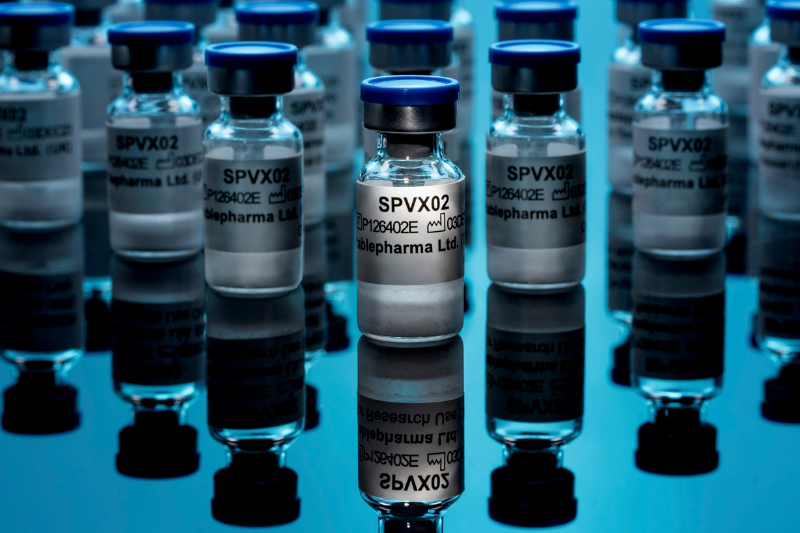
The world's first fridge-free vaccine has produced encouraging Phase I results, offering a potential route to reducing the number of vaccines lost each year globally to cold-chain failures during storage and transport.
SPVX02, a reformulated tetanus-diphtheria (Td) vaccine developed by UK biotech Stablepharma, was tested in a randomised Phase I trial involving 60 healthy adults at the NIHR Clinical Research Facility at University Hospital Southampton.
The results, published in eClinicalMedicine, showed the vaccine was well tolerated with no vaccine-related serious adverse events and that by 28 days all participants had reached protective antibody levels against both tetanus and diphtheria, comparable to licensed vaccines.
Critically, stability data showed that SPVX02 retains potency for at least two years when stored at 30°C (and for six months under accelerated conditions at 40°C).
Testing is ongoing to establish whether stability can be extended to four years.
The vaccine has also been shown to remain fully potent after three cycles of extreme temperature fluctuation between -20°C and +40°C.
How the platform works
SPVX02 is built on Stablepharma's StablevaX platform, which converts products normally requiring 2-8°C refrigeration into room-temperature-stable formulations.
 Speaking to Manufacturing Chemist, Stablepharma COO Dr Karen O'Hanlon (pictured) explained that the platform reformulates products using a proprietary blend of trehalose and other GRAS excipients, followed by a drying process, typically lyophilisation.
"[This] creates stable, solid formulations that can be reconstituted, typically with sterile water, immediately before administration to a patient," she said.
The approach immobilises both the vaccine antigen and the aluminium-containing adjuvant in a solid, glass-like state, preventing the particle aggregation and toxoid degradation that normally occur when vaccines are exposed to heat or freezing.
According to Dr O'Hanlon, this is a significant technical achievement given that


