

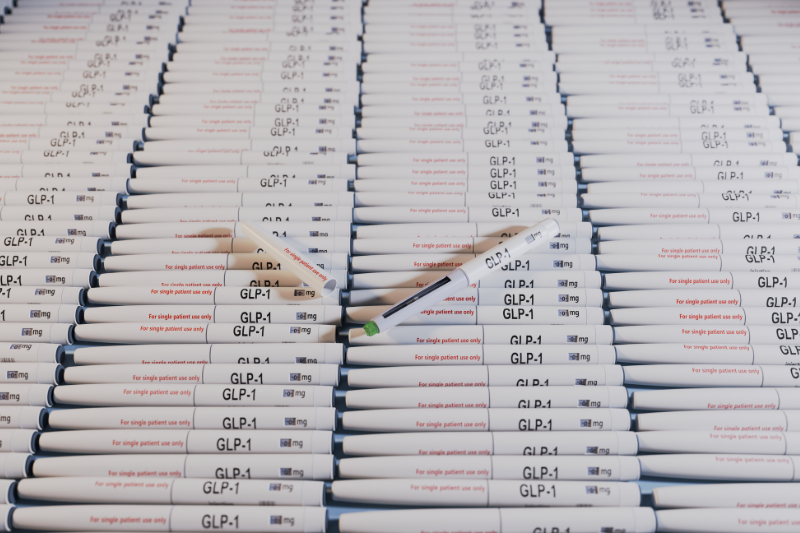
New research has revealed that the number of patent applications for GLP-1 drugs has risen by 146% in the last five years, according to Pinsent Masons.
Patent applications rose 28% in the year to 31 March 2026, from 726 to 936. In the year to March 2021, only 380 were filed.
The surge in global applications can be attributed to four key market dynamics and strategies among companies operating in the space.
1. Beyond the primary patent
Brand-name manufacturers, such as Novo Nordisk, are increasingly filing secondary and tertiary patents on peripheral features rather than relying solely on the primary patent for the API.
This shows up in the data — last year, 49 patent applications related to oral formulations of GLP-1 drugs were filed as companies attempt to extend the shelf life of their products.
More than half of all patents listed on GLP-1 drugs cover other delivery devices (such as prefilled injector pens, nozzles and dose counters). Companies also file extensive patents on new formulations, chemical synthesis processes, phenol-free compositions and alternative delivery routes (such as converting subcutaneous injections into oral tablets).
2. Method-of-use patents
Clinical research and real-world data have also revealed broader secondary clinical benefits of GLP-1 molecules beyond their original approval for Type 2 diabetes.
GLP-1s have demonstrated efficacy in weight management/obesity, cardiovascular disease reduction and chronic kidney disease, leading companies to file method-of-use patents and target specific patient populations to protect and commercialise these new indications
For example, in the last year, the sector saw 194 patents filed for liver diseases, 170 for hypertension, 150 for stroke, 124 for kidney disease and 77 for sleep apnoea.
There is also an increasing range of other conditions that are not associated with obesity and/or Type 2 diabetes that are being targeted by GLP-1 patent applications, including cancer, Parkinson's disease, addiction and polycystic ovary syndrome.
3. Evergreening
Pharma companies will often use follow-on continuation patents to protect multi-billion-dollar blockbuster revenues.
By layering numerous patents late in a drug's lifecycle — a practice known as "evergreening" —companies create dense patent thickets that increase legal costs and create regulatory delays for potential competitors, effectively extending market exclusivity beyond the expiration of the original compound patent.
4. Generic and biosimilar applications
As primary active-compound patents reach their expiration dates in major international markets (such as India, China, Canada and Brazil), generic and biosimilar manufacturers have significantly increased their own patenting and regulatory filings.
Domestic pharma companies in these regions are actively filing patents for alternative synthetic or biological manufacturing methods, reusable pens and novel oral formulations to capture market share after exclusivity ends.
Semaglutide patent cliff
The long-standing market exclusivity enjoyed by innovator Novo Nordisk for semaglutide is rapidly approaching its end, with patents already expiring in Canada, India, China and Brazil this year.
Semaglutide is the API in Novo's Ozempic (type 2 diabetes), Wegovy (obesity) and Rybelsus (oral diabetes).
Generic and biosimilar drugmakers have already begun rapidly advancing alternative formulations and pursuing international expansion strategies, driving a surge in patent filings and R&D submissions.


