
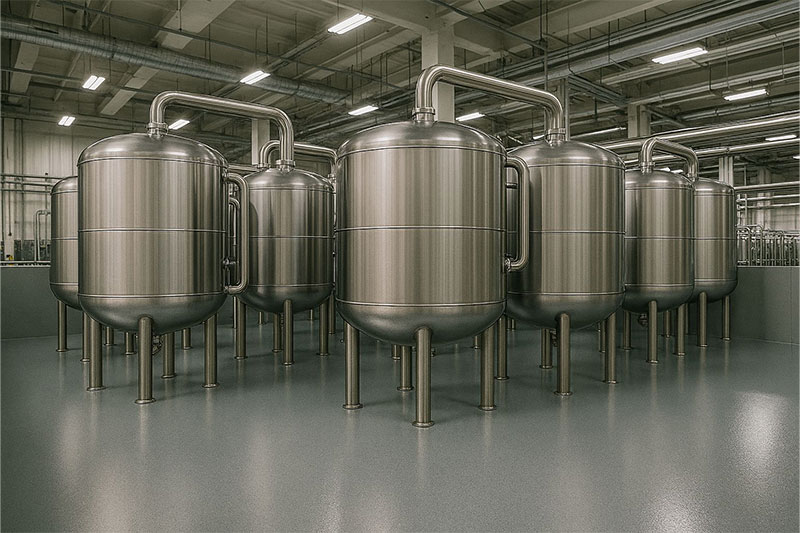
As regulatory expectations around secondary containment in chemical storage continue to evolve, Sherwin Williams Protective and Marine Coatings has launched a new range of systems designed to provide comprehensive, compliant protection, tailored to a versatile set of applications. The ControlTech range of chemical-resistant coating systems protect concrete containment areas and the surrounding environment from hazardous chemicals, fuels and oils when tanks or pipes fail.
It comes at a time of increasing international focus on protecting water sources and soil from industrial processes. CIRIA C736, in the UK, and Germany’s Water Resources Act (WHA), for example, both highlight the importance of effective secondary containment design. While regulations and guidance differ between markets, the underlying principle is the same: facilities handling chemicals must have appropriate systems to contain potential releases and minimise environmental impact in place.
ControlTech Systems have been developed to support these requirements. They provide a structured range of chemically resistant flooring and containment solutions for industrial environments where accidental spills, leaks or splashes could pose a risk to infrastructure, workers and the environment.
What is secondary containment?
Secondary containment is a backup barrier designed to capture chemical spills or leaks from primary storage, preventing them from penetrating into the substrate or reaching the environment if a tank, pipe or storage vessel fails. Typically, it consists of a sealed, chemical-resistant barrier applied to the areas hazardous substances are stored, handled or transferred, such as concrete floors, bunds, tank bases and loading areas.
Such systems protect people, infrastructure and watercourses, while helping organisations to reduce the risk of environmental damage, regulatory penalties, and costly clean-up operations, as well as reputational harm.
What is ControlTech?
ControlTech is a range of specialist coating technologies designed to withstand specific chemical exposures. It has been developed around recognised containment principles, including the need to consider worst-case spill scenarios, and features nine separate systems across three chemical resistance profiles:
Epoxy-based systems, for durable protection for concrete in standard containment areas with moderate chemical exposure, such as manufacturing floors, storage areas and bunds;
Novolac epoxy systems with enhanced chemical resistance for more aggressive environments, including chemical processing areas and containment zones exposed to corrosive substances;
Vinyl ester systems provide advanced protection for the most demanding applications involving highly aggressive chemicals or severe exposure conditions.
Different system build-ups are available within each profile, depending on chemical resistance requirements, mechanical demands and operating conditions, enabling developers and operators to tailor the specification to their application.
Michael Harrison, Global Product Director – Linings, said:
Secondary containment is a critical safeguard for any facility handling hazardous chemicals. A spill or leak from a storage vessel can have serious consequences for the environment, site operations and business reputation. By providing a robust barrier between chemicals and the surrounding environment, secondary containment systems help organisations protect their assets, support regulatory responsibilities and minimise the risks associated with accidental releases. The ControlTech range of systems brings our established coating technologies into a clearly defined range, helping customers identify the right solution for the chemicals, operating conditions and risks at their facilities.
For more information: https://industrial.sherwin-williams.com/emeai/gb/en/resin-flooring/resources/secondary-containment.html


