
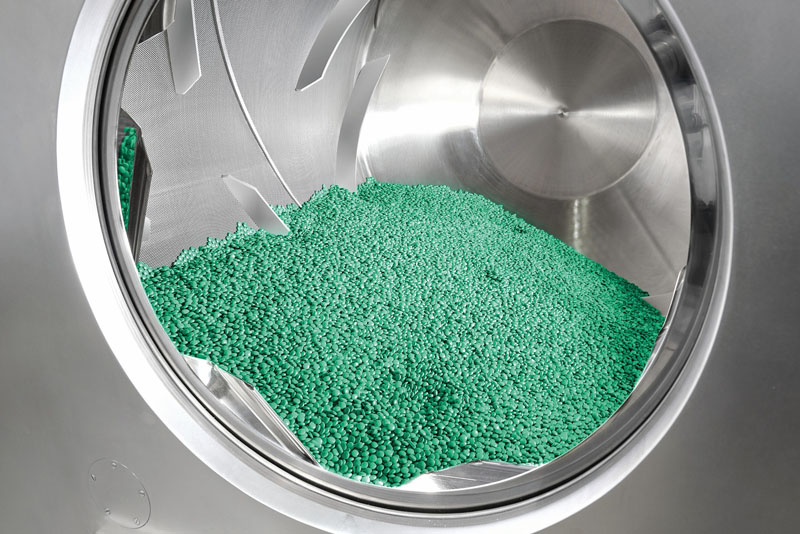
Not every coating technology has kept pace with the growing demands of the pharmaceutical industry.
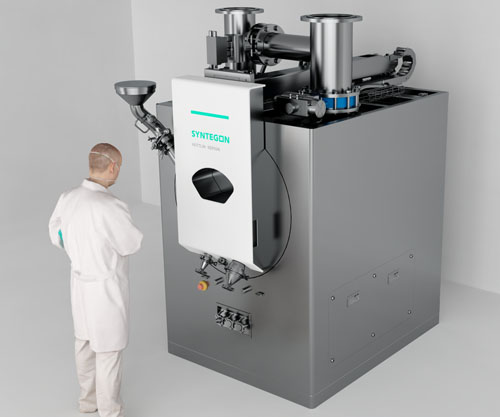
This is why Syntegon has developed Sepion, a machine series for tablet coating that addresses the current challenges faced by drug manufacturers and CDMOs.
Coating is an important step in tablet manufacturing. It is a functional component of the product and, in many cases, critical to its therapeutic efficacy.
An uneven coating can quickly become a quality issue that, in the worst case, compromises patient safety.
As a result, pharmaceutical manufacturers need solutions that meet requirements for both colouring and flavour masking, as well as for applications such as enteric coatings, controlled-release coatings or coatings with added active ingredients.
Fritz-Martin Scholz, Global Product Manager at Syntegon Technology, reports.
Current challenges and technological boundaries
The demands placed on the coating process have increased significantly in recent years. Batch sizes are becoming increasingly variable, product portfolios are expanding and the number of new drugs for rare diseases (orphan drugs) is on the rise.
Pharmaceutical manufacturers must make their processes more flexible.
The same applies to CDMOs, which face the challenge of frequently changing orders. A coater that, because of its design, operates reliably only when filled to a certain minimum level quickly becomes a strategic and financial bottleneck.
At the same time, highly potent active ingredients are also putting pressure on pharmaceutical companies and CDMOs. They impose strict requirements on containment solutions to protect operators and the environment.
By contrast, manual interventions and adjustments to process parameters pose a risk that can directly affect the product.
Added to this is the risk of scale-up: A process developed in the lab must be reproducible in commercial production.
If the transfer fails, it can quickly lead to months of costly delays. This is a very realistic scenario, particularly in tablet coating where airflow, spray patterns and drum dynamics are closely interrelated.
Time for a new coating process
Today, coaters must perform better than ever before. Yet in many production facilities, the reality is quite the opposite: outdated equipment can no longer keep pace with current developments.
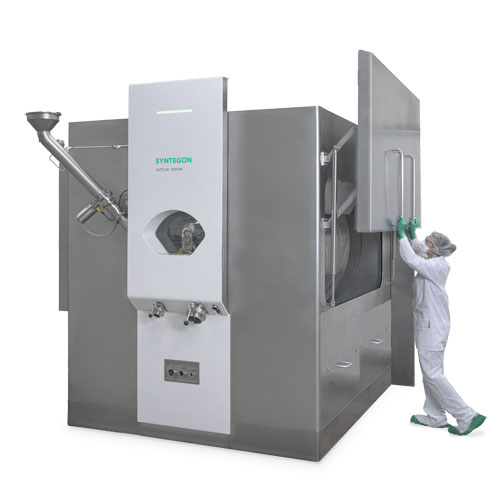
This also applies to the once-leading Manesty drum coater technology. Formerly the undisputed market leader and widely used in production facilities globally, it eventually reached its peak.
Significantly more flexible concepts entered the market and customer requirements became more complex. Yet the established technology was no longer consistently refined.
Open loading and unloading, limited batch flexibility and complex custom solutions for containment requirements became limiting factors.
After acquiring the Manesty portfolio, one thing quickly became clear to Syntegon: “business as usual” was no longer an option.
The Sepion series was developed based on the technological expertise behind the Manesty drum coater and the mixing, spraying and drying process know-how of Syntegon’s subsidiary: Hüttlin.
Sepion is not a simple evolution of the earlier coater; it’s the answer to the questions that keep pharmaceutical manufacturers and CDMOs up at night:
- How can tablets be coated as flexibly as possible, from small development batches all the way through to commercial production?
- How can manual interventions be eliminated without compromising process control?
- How can new containment requirements be met without separate custom solutions?
Highly flexible, closed and efficient
The Sepion coaters process batch sizes from 10–100% of the working volume without the need for time-consuming changes to the mixing elements.
The optimised drum geometry, with its integrated mixing elements, ensures uniform tablet movement at any fill level — a fact that was confirmed in a study conducted in accordance with ISPE guidelines.
From filling to sampling to emptying, the Sepion coater operates in a fully closed system.
The tablets are fed through a filling tube, samples are taken via a special mechanism and emptying is performed automatically by reversing the drum and using integrated discharge blades.
This makes the coaters ideally suited for a containment upgrade up to OEB5.
The longer drum provides more surface area for spray nozzles, thereby increasing spray rates while reducing processing times.
The automatic spray arm maintains a constant 90-degree angle to the tablet bed.
The airflow system is designed to minimise turbulence, resulting in lower spray loss and optimal homogeneity, thereby meeting the requirements for demanding applications such as API coating.
The entire Sepion series is equipped with drums of similar geometry as well as comparable spray patterns and airflow designs. This significantly reduces transfer risks and accelerates the transition from lab to production.
Partnership across the entire lifecycle
Until now, the drum coater was available in six sizes with batch capacities ranging from 175–1000 L. The new Sepion 75 pilot coater now also covers batches from 8–75 L.
Two interchangeable drum sizes simplify production planning and reduce downtime during product changeovers.
The new Sepion 75 consistently extends the series’ scaling logic. The result: a coater that covers both the early development phase and advanced pilot batches by scaling the process parameters.
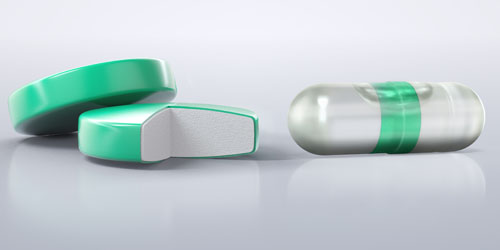
In addition, the new pilot coater offers all the other key features of the Sepion series: closed material handling, containment capability up to OEB5 and fully automatic cleaning.
This development shows that tablet coating is much more than a single process step.
It combines airflow, thermodynamics, drum geometry and the highest quality standards into a sophisticated interplay that is evident in every detail of the Sepion series.
This way, Syntegon supports pharmaceutical manufacturers and CDMOs throughout the entire coating process — from initial testing at the OSD Customer Center through start-up to comprehensive lifecycle services.
The latter helps to increase equipment availability and service life while improving long-term cost-effectiveness and sustainability.
Operators of Manesty drum coaters also benefit from this continuity: Syntegon supports them with the maintenance and modernisation of existing systems as well as with the transition to the next generation of machines.
After all, it’s not just about technology. It’s about stable processes and quality for the benefit of patients.


