
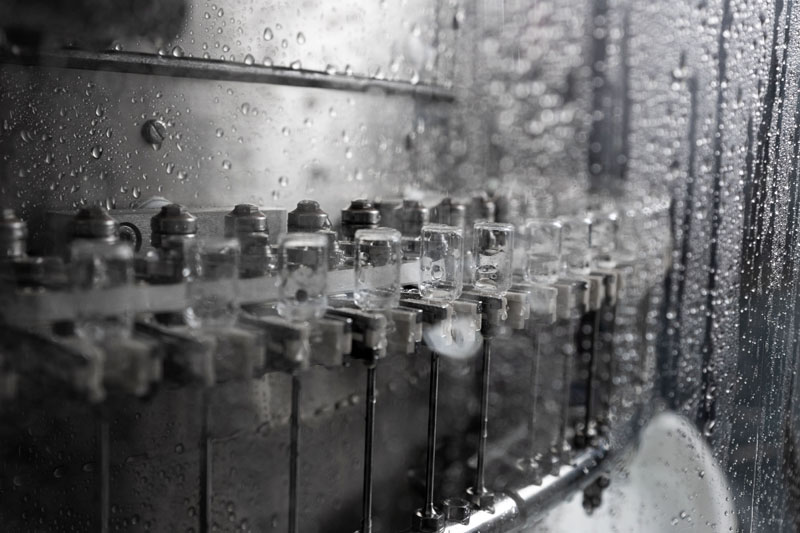
The pharmaceutical industry is seeing strong growth in highly potent active pharmaceutical ingredients (HPAPIs) and highly potent drug products, such as antibody-drug conjugates (ADCs).
According to a recent GlobalData report, innovative biopharmaceutical ADCs are currently transitioning from a niche drug class to a major therapeutic and commercial modality.1

In fact, an increasing number of ADCs are set to reach blockbuster status, whereas the total number of ADCs that are actively being developed or marketed has tripled during the last 5 years.
Although most of the ADCs developed so far are being used to treat cancer, there is also enormous potential in other areas such as autoimmune and infectious diseases as well as cardiovascular and metabolic disorders.
Sarah Springer (pictured), Global Product Manager, Vials, Ampoules and Filling Systems, at Syntegon Technology, reports.
Currently, China is one of the leading markets for early-stage ADC development and trial initiation, with above-average patent filings and a growing installed base of production lines.
In comparison, the US and Europe are placing a stronger focus on late-stage execution and final approvals.
Global regulatory engagement reflects the growing confidence in the clinical value and differentiation of ADCs, whereas strong industry investments confirm these highly potent drugs as a long-term strategic priority with high growth potential.
Between 2017 and 2024, global sales increased from $1.6–13.6 billion, corresponding to a CAGR of 35.8%.
By 2031, the market is expected to reach $65.2 billion, driven by both a growing number of approved ADCs and an increasing share of high-revenue products.
Main challenges in fill-finish operations
Although this market outlook offers significant potential for pharmaceutical and biotech manufacturers and CDMOs, they also face several challenges when pooling, filling and further handling these cost-intensive, highly potent drugs.
ADCs are almost exclusively produced as lyophilised solutions to ensure stability and prolong their shelf-life before they reach patients.
From an economic perspective, every single drop counts. Only by keeping product loss to an absolute minimum and ensuring that every vial is filled accurately can manufacturers turn ADCs into viable commercial products.
In addition to product yield, robust protection of both products and operators in line with international regulations is one of the most important prerequisites.
For example, EU GMP Annex 1 mandates strict separation of the aseptic process zone from operators.2
In the case of highly potent drugs, containment is not only essential to ensure consistent product integrity but also to protect people from contact with HPAPIs and the final drug product.
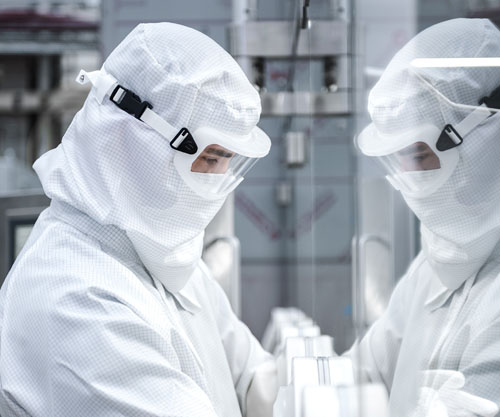
Isolators, along with their effective and practical cleanability and washdown capabilities, are crucial to reducing human intervention and ensuring that ADCs are delivered to patients at the highest possible quality.
This requires a consistent design for highly potent vial processing along the entire line, from pooling, cleaning and sterilisation to filling, freeze-drying and capping, external cleaning and beyond.
Containment by design
When designing a new vial line for highly potent drugs, containment and consistent process control must be considered from the outset. This applies not only to the main fill-finish operations, but also to the upstream process steps.
In ADC manufacturing, pooling or formulation plays a critical role: it ensures that the HPAPI (the concentrated active substance that will become the highly potent drug product) is safely mixed with the required additives while maintaining strict separation between product and operators.
This requires appropriate redundancies, for example, for measuring devices and air filtration, as well as dedicated interfaces between pooling and fill-finish.
The filling/closing equipment also requires adequate containment that complies with regulatory guidelines.
For highly potent vial filling lines, an integrated isolator is the preferred, and often the most robust, choice. Integrated filling stations, minimised toxic zones and highly automated operations reduce manual interventions.
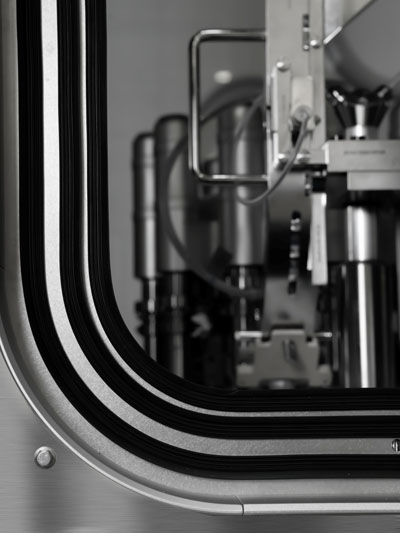
For example, automated, tool-free changeovers, gentle transport systems and automated loading and unloading equipment for the freeze-dryer make operations much safer for both products and people … and can boost yields significantly.
Moreover, cleanability must be designed into the line from the beginning to ensure that no highly potent residues remain in the process zone after each batch.
A combination of external cleaning and washdown of all non-removable components is currently the best option and should be assessed during the mock-up phase of a new line.
One line, many options
Integrated barrier technology and additional functions further support safe and efficient processing.
Automated filter test racks for pre-use post-sterilisation integrity testing (PUPSIT), for example, help to increase patient safety and prevent batch losses by detecting filter defects before product exposure.
Automated active and passive viable monitoring can extend settle plate change intervals by reducing manual intervention while improving process safety and machine availability.
Other important options include offline and standalone online glove testing systems, as well as smart filling features designed to improve product yield.
Precise weighing and filling during start-up and at the end of the production cycle help to increase the number of correctly filled containers and make full use of the highly valuable product.
In addition, the automatic detection and correction of underfilled containers support an efficient production flow and further minimise product loss.
To make full use of their potential, these options should be considered and integrated during the planning stage of a new line.
Existing equipment can often be upgraded at a later stage, allowing manufacturers to enhance performance and process safety with time.
An integrated approach from a single source
By combining pooling, filling, handling steps and additional options in one holistic line, pharmaceutical manufacturers and CDMOs benefit from numerous advantages.
The equipment can be tailored to the specific requirements of highly potent drugs from the outset.
Clearly defined interfaces throughout the line help to accelerate production ramp-up and streamline overall processes.
Working with a single supplier also reduces project and regulatory complexity as it minimises potential weak points between machines and suppliers.
This, in turn, supports faster qualification and validation, ultimately helping manufacturers to bring new ADCs to market more quickly.
For highly potent vial lines to perform reliably from day one, manufacturers need more than an equipment supplier.
They need a partner with in-depth industry knowledge, a clear understanding of regulatory requirements and the in-house expertise to provide further value-adding services such as product assessments, testing and qualification concepts, washdown verification and lifecycle services.
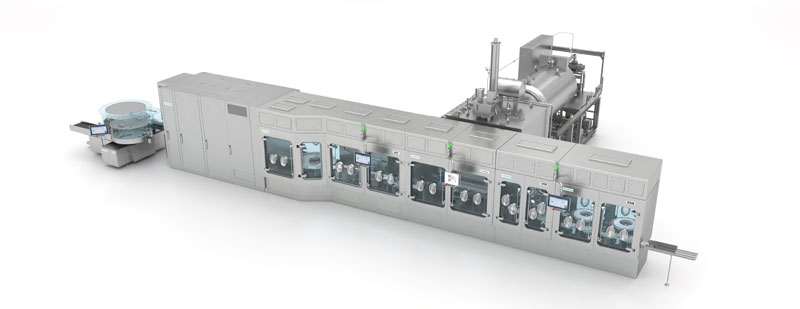
As a strategic lifecycle partner to the pharmaceutical and biotech industry, Syntegon helps customers to reduce risk and manage complexity with a pragmatic, integrated approach.
As ADCs move toward significant commercial potential, Syntegon is already supporting customers worldwide with integrated vial line solutions that bring their highly potent drugs to market quickly and at the highest quality.


