
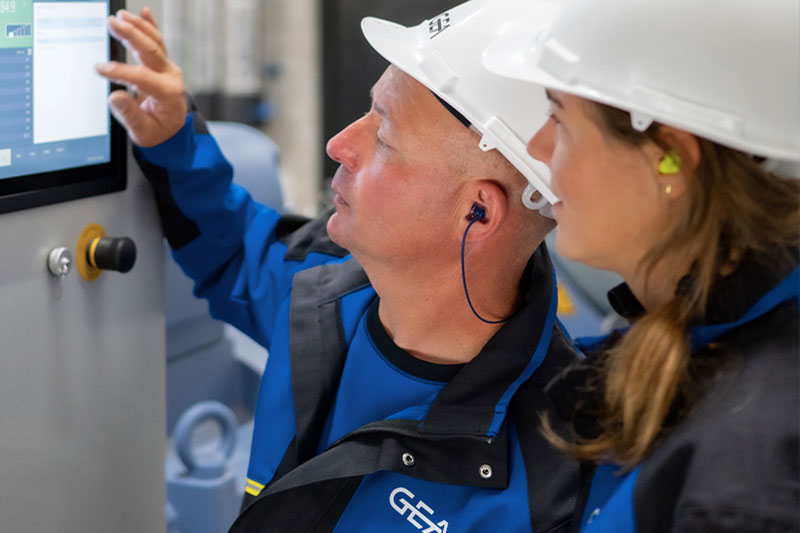
In pharmaceutical manufacturing, safety is not an option; it’s the foundation upon which everything else is built. Patients swallowing a tablet or inhaling a powder are placing absolute trust in the integrity of the process that made it. That trust carries enormous responsibility … and it falls squarely on the shoulders of the people who own and operate the equipment.
But, asks GEA’s Benoit Dehaene, Director of Customer Care, Pharma and Food Applications, what does “safety” really mean in a pharmaceutical facility? The answer is more layered than it might first appear. And getting it right requires expertise, vigilance and the right partner at your side.
Product safety: protecting the patient
The most fundamental aspect of safety is ensuring that the final drug product will not harm the person consuming it. In practice, this means preventing cross-contamination between products, maintaining cleanroom integrity, validating washdown procedures and verifying the integrity of machine gaskets, seals and containment components. Every batch leaving the facility must meet stringent quality standards.
The consequences of failure here are severe: product recalls, patient harm and reputational damage that can take years to recover from. Product safety is non-negotiable and demands a culture of continuous vigilance. That’s not just at commissioning, notes Benoit, but throughout the equipment’s entire operational lifetime.
Personnel safety: protecting the people in the plant
Secondly, but no less important, is the safety of the workforce operating the plant. Regulations governing occupational exposure limits, the handling of highly active pharmaceutical ingredients, ergonomic requirements and emergency procedures are continuously being updated. What was compliant 5 years ago may not be relevant today.
Even the best-designed equipment is only as safe as the people using it. Benoit observes: “Not only must operators be trained how to use equipment, but also on the critical dos and don'ts that keep them safe in daily practice.
GEA’s training programmes ensure that operators are fully competent, current and aware of the behaviours that protect both themselves and the product. Training covers both the technical operation of the equipment and the broader safety principles that underpin good manufacturing practice (GMP). In an industry in which procedures evolve and personnel change, structured and regular training is one of the most effective investments a manufacturer can make.
Knowledge degrades with time; team turnover, changing product lines and the routines of daily work can all cause important safety behaviours to slip. As such, regular refresher training is not a luxury; it is a necessity.”
Protecting your people involves more than training; it’s also essential to ensure that the mechanical condition of the machine is optimal. A valuable tool that helps to achieve this is GEA's Health Check. Conducted by GEA engineers who know these machines inside and out, it provides a thorough inspection of your equipment and process line.
Following the inspection, GEA provides a detailed machine status report, comprising a prioritised set of recommendations, modernisation opportunities and a proposed preventive maintenance schedule.
ATEX compliance: the hidden risk of a changing product portfolio
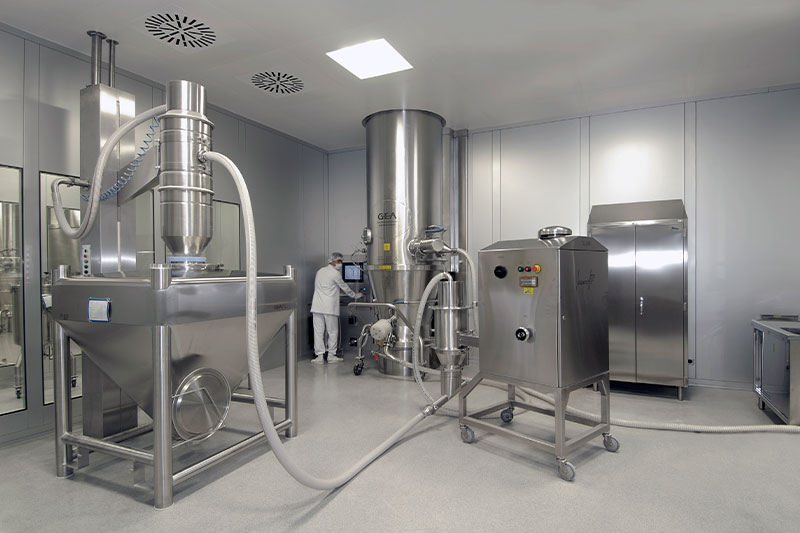
The third criterion is perhaps the least visible and, potentially, the most dangerous: ATEX compliance. ATEX — the European framework governing equipment and protective systems in potentially explosive atmospheres — is a critical consideration in any facility that processes powders, solvents or other substances that can form explosive mixtures.
Here, a specific and growing risk deserves attention. Benoit has seen it play out in multiple facilities in France, Spain, the UK and beyond. “We have cases where the plant was originally designed for water-based applications and, suddenly, a CDMO might receive a request (from their own customer) to handle a novel drug that’s solvent-based," he explains. “They don't always realise that the plant is unsafe to produce it."
This scenario is becoming more common as contract development and manufacturing organisations (CDMOs) grow in prominence. These companies are under constant pressure to take on new molecules and new product types. “It’s how their business grows,” says Benoit: “But a machine certified and configured for one application cannot simply be redeployed for another without verifying that it remains compliant under current ATEX regulations.”
GEA equipment is built to last. Machines from the 1990s are still running today. If a facility has used the same equipment for the same product without modification, it remains compliant. But the moment a new product is introduced, particularly one with different solvent characteristics or explosion risk profiles‚ the company that owns it is obliged to verify compliance with current regulations, which have evolved considerably in recent decades.
The stakes of getting this wrong are very real. Dehaene recalls a case in France in 2021 when a machine exploded during production. “Thankfully, the machine was strong enough to contain the explosion and there were no personal injuries,” he says. "But the facility was inoperative for many months afterwards. The customer, having switched production without our knowledge, subsequently realised that they couldn't produce that [particular] product with their existing infrastructure and needed to change things on the machine to make it safe. Had they consulted us, we could have told them about the potential risk and how to mitigate it.” The financial and operational costs of that interruption were far greater than any investment in upfront compliance assessment would have been.
GEA's ATEX survey takes a holistic look at all aspects of the plant from an explosive-atmosphere risk perspective (earthing and bonding, equipment certification, hazardous area classification and more). It identifies compliance gaps that may have developed with time through equipment modifications, new product introductions or regulatory evolution. It also assesses whether products currently being manufactured can be produced safely within the existing plant configuration.
The Responsibility is Yours … But Help is Available
Ultimately, overall responsibility for every aspect of safety rests with the equipment’s owner. Regulatory agencies are unambiguous on this point: if an explosion occurs, the owner is accountable, not the supplier. As Dehaene puts it: "Although we, as suppliers, are not answerable, we want to help. We want to ensure that both the machinery and the process are compliant.”
This is the spirit in which GEA approaches its service work: not as an auditor, not as a regulator, but as a consultant and partner. One with extensive experience derived from hundreds of pharmaceutical facilities and an intimate understanding of the equipment at the heart of their operations.
“We consider ourselves to be an expert resource with a role to play by helping customers to evaluate their plant and maintain the highest levels of safety,” says Dehaene‚ “for product quality, for operators and to conform with today’s regulations.”
How GEA supports safe manufacturing
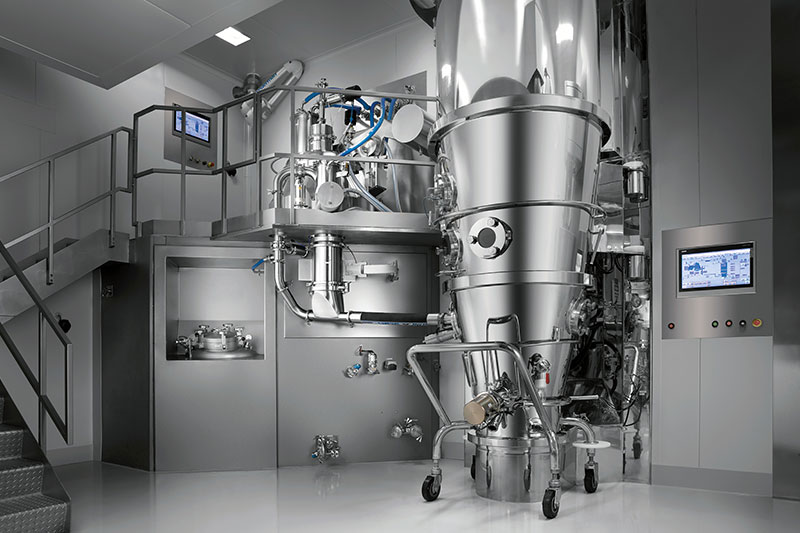
GEA's service offering is built around that consultative principle. Pharmaceutical manufacturing will only grow more complex. Products are more potent, regulations are more demanding and the pressure to remain flexible is more intense.
For CDMOs, especially, the temptation to move quickly when a new drug opportunity arises is understandable … but the risks of doing so without proper safety validation are significant. As Dehaene reflects: "Don’t just look at the financial benefits of producing a new drug. Make it safe first."
GEA's mission is to be the partner that helps customers do exactly that by ensuring that safety, compliance and performance work together, not against each other. Because when patients and your staff are counting on you, good enough is never enough.