
Synthace has announced a collaboration with Charles River Laboratories International, Inc. (Charles River), a leading global drug discovery, development, testing and manufacturing solutions provider.
Under the agreement, Charles River will give its clients access to Synthace’s transformative approach to developing, automating and transferring more robust assays, faster and more efficiently than using other methods.
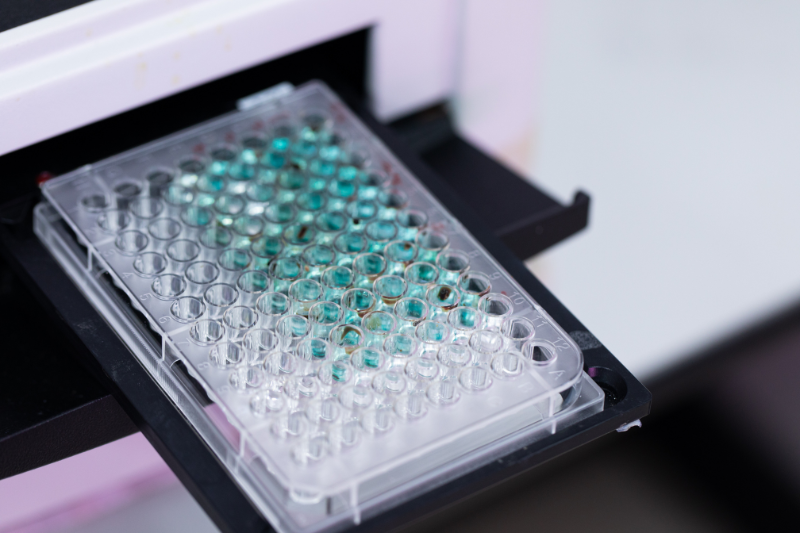
The collaboration follows on the heels of a successful proof-of-concept project in which Charles River used Synthace’s software to effectively and rapidly develop a 1536-well assay and assay transfer, implementing a design of more than 700 experimental conditions across multiple laboratories and equipment.
Why this matters
Reproducing experiments across different sites has long been a significant challenge for biology research and development teams, with 72% of researchers acknowledging a reproducibility crisis.
With such a challenge estimated to cost $100bn annually in preclinical research alone, the collaboration between Synthace and Charles River has the potential to improve reproducibility through a new approach to assay development.
Assays are a vital part of machinery for drug discovery, providing a window into how molecules might become drugs, yet their development often ends up as a time-consuming bottleneck.
Biological complexity hampers assay development and transfer, creating costly delays, variable data and significant frustration for project teams.
In addition, while the introduction of artificial intelligence (AI) can help accelerate areas such as target identification, this adds to the volume of demands that must still be validated through wet lab experiments, contributing to delays.
Many Research and Development (R&D) teams use one-factor-at-a-time (OFAT) approaches to develop assays, yet this method is time-consuming and limited in scope.
To combat this, Synthace enabled Charles River to derisk its assay development and transfer through a combination of Design of Experiments (DoE), automation and software.
This was significant because, while having clear benefits, DoE has traditionally been considered a complex, resource-intensive process with a high barrier to adoption.
With Synthace’s technology integrated into Charles River’s lab automation, teams were able to implement high-throughput DoE across multiple locations and a diverse user base, achieving the following:
- More robust and insightful experimentation
- Rapid generation of conclusive data
- Seamless transfer between laboratories/equipment.
Markus Gershater, CEO and co-founder at Synthace, said: "Computational biology has taken a significant leap forward with AI, but in doing so, the lab risks being left behind."
"Combining DoE, automation and software is the answer, as together they deliver a step-change in experimental power to unpick biological complexity."
"We call this High Dimensional Experimentation and it will be the next generation of experiments for drug discovery."
Dr Rob Howes, Senior Director of Small Molecule Discovery at Charles River, added: "Synthace allows us to conduct more technically demanding experiments with greater scientific rigour."
"With this, we know that the assays we’re developing are more robust, allowing a greater degree of certainty in the results we’re seeing, while also improving their reproducibility."
"In doing so, we’re dramatically reducing the amount of time we need to develop robust assays and ultimately speeding up this critical part of drug discovery."


