
The ophthalmic biologics company Allotex has announced a new partnership with Daicel High Performance Polymers (HPP) to advance a next-generation biocompatible, reversible tissue-based platform for corneal allografts.
The duo will work together to develop a high-performance storage and delivery system for corneal allograft technologies aimed at preserving tissue integrity, ensuring product reliability and supporting consistent outcomes in clinical use.
The partnership brings together Allotex's expertise in human tissue-based implants with Daicel HPP's advanced material science capabilities.
Allotex's proprietary approach uses precisely shaped human corneal tissue to preserve the eye's natural structure through a tissue-addition method that is both biocompatible and reversible.
It underpins the firm's lead product, the Allotex TransForm Allogenic Corneal Inlay, which uses a thin, laser-shaped disc of sterile corneal tissue that integrates seamlessly with the patient's cornea.
The company said the approach is particularly well-suited for specific patient profiles who are seeking functional improvement but are cautious about procedures that permanently alter tissue or involve intraocular intervention.
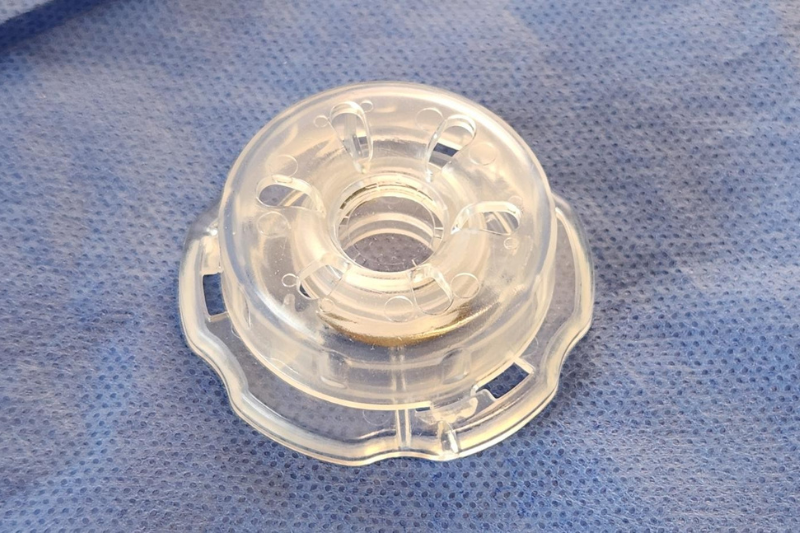
A critical element of Allotex's technology platform is its corneal lens storage and delivery system, which incorporates precision-moulded components manufactured from TOPAS cyclic olefin copolymer (COC).
The biological corneal inlays must be maintained in a moist environment for up to 12 months, requiring a material that reliably preserves internal chamber conditions during an extended shelf life.
The company said it selected TOPAS COC after evaluating multiple polymer options for its storage system, citing the product's "exceptional material purity" and "high chemical resistance," which ensure stability in storage media.
In contrast, many competing polymers permit gradual moisture transmission, leading to solvent loss, drying and compromised tissue viability.
"This collaboration reflects a shared commitment to advancing a more biologically aligned approach," said Evan Sherr, COO, Allotex.
By combining our tissue-based platform with advanced material capabilities, we are building a system that supports both the integrity of the implant and the needs of the clinicians who use it.
"At Daicel High Performance Polymers, we see the greatest impact when material science helps solve complex challenges at the system level," added Raghavendra Raj Maddikeri, Business Development Manager – Health Care, Daicel High Performance Polymers.
Our collaboration with Allotex demonstrates how the right material can help preserve sensitive biologic components while supporting performance, quality and scalability.
Allotex’s biologic corneal implant technologies are approved for use in the European Union and are currently undergoing clinical development in the US. The firm adds that it has submitted an FDA Investigational Device Exemption (IDE) application to support clinical trials of its corneal implant platforms.


