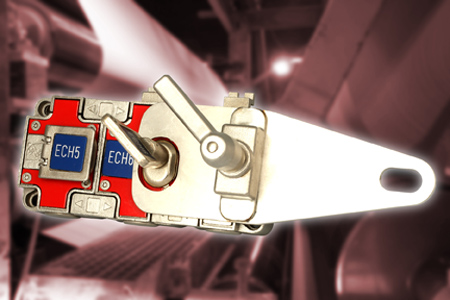
New stainless steel access interlock prevents accidental lock-in in dangerous areas
SERV Trayvou Interverrouillage (STI) has launched the NXO1LTC, a new access interlock with personnel key for harsh or corrosive environments
To gain access to a dangerous area, the operator has to first insert an isolation key into the lock portion. Turning this key releases the personnel key, and allows the bolt to be removed and the door opened.
The operator retains the personnel key while inside the dangerous area. This prevents the door being shut behind them and also stops the machine from being restarted by another person.
The NXO1LTC’s completely stainless steel construction makes it suitable for use in harsh or corrosive environments as the paper, food, robotic, chemical and petrochemical industries.
As an entirely mechanical proposition, the NXO1LTC removes the need for cabling, reducing related maintenance costs and eliminating the risk of a cable malfunction.
STI’s safety products are heavy-duty and comply with all European machinery directives currently in force. They are popular with customers due to their strength and simple method of operation.

You may also like
Manufacturing
Key drivers behind the rise of microsphere drug delivery systems
Read moreMicrospheres shift drug delivery from broad distribution to precise targeting. These systems improve therapeutic consistency, lower systemic exposure, and adapt to complex treatment regimens. Their growth reflects progress in polymer science, pharmacokinetics, and the push for more individualised care in clinical settings. Let’s explore some of the key drivers behind the rise of microsphere drug delivery systems and look ahead to predict future growth trends
Trending Articles
-
You need to be a subscriber to read this article.
Click here to find out more.
You may also like
Manufacturing
Key drivers behind the rise of microsphere drug delivery systems
Microspheres shift drug delivery from broad distribution to precise targeting. These systems improve therapeutic consistency, lower systemic exposure, and adapt to complex treatment regimens. Their growth reflects progress in polymer science, pharmacokinetics, and the push for more individualised care in clinical settings. Let’s explore some of the key drivers behind the rise of microsphere drug delivery systems and look ahead to predict future growth trends
Regulatory
3PBIOVIAN secures French CIR certification for Spain and Finland R&D sites
The CDMO has obtained French Crédit d’Impôt Recherche (CIR) certification for its Pamplona and Turku sites, enabling French partners to access tax incentives when collaborating on recombinant protein and advanced therapy projects