

A newly published review has suggested that novel technologies for intradermal (ID) vaccine delivery may rival traditional methods such as intramuscular administration.
With outbreaks such as Hantavirus, Ebola and measles currently in the headlines, there has been a growing interest in dose-sparing strategies and equitable vaccine access — sparking increased focus on ID vaccine delivery.
Limitations of traditional vaccine administration
Traditional vaccine administration — which is via intramuscular (IM) injection — requires a high level of medical training and precision.
The procedure demands selecting the appropriate site and needle size based on the patient's age and body mass, inserting the needle at a 90-degree angle and injecting the solution smoothly without aspiration.
Drawbacks also include localised pain and the risk of nerve injury or bleeding. The procedure can cause significant anxiety, particularly in children, leading to reduced uptake. Needle-based administration also carries the risk of bloodborne pathogen transmission at the injection site.
Liquid formulations used in these methods require cold-chain maintenance, with temperature fluctuations drastically reducing shelf life.
 Traditional vaccine delivery, therefore, remains challenging to implement at scale. With outbreak vaccination policies requiring rapid administration, access to highly trained medical personnel can be a major logistical bottleneck — particularly in areas with limited healthcare infrastructure.
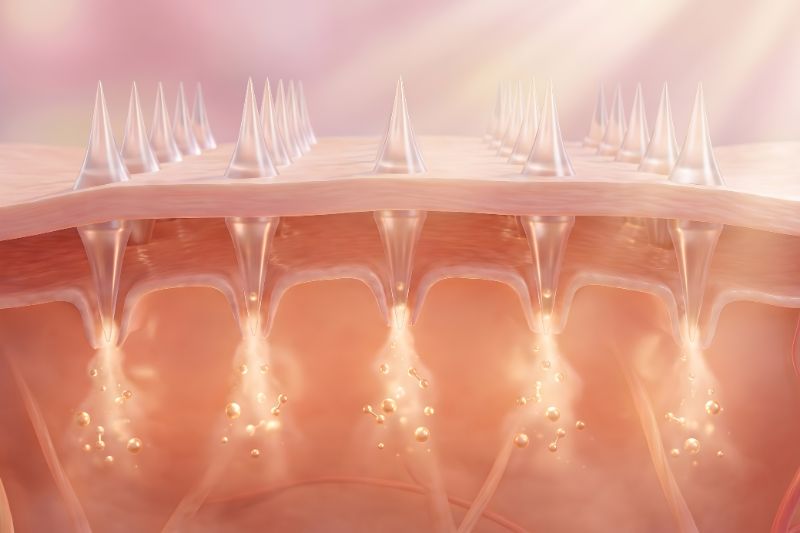
To address these constraints, global health initiatives are increasingly prioritising alternative delivery systems. Innovations such as microneedle patches and edible formulations are being actively researched to bypass cold-chain requirements, enable self-administration and reduce reliance on specialised personnel.
A new review of the ID landscape
A new publication in Qeios provides an overview of the current landscape around ID vaccine delivery — the injection of antigens into the superficial layer of the skin, between the epidermis and dermis.


