

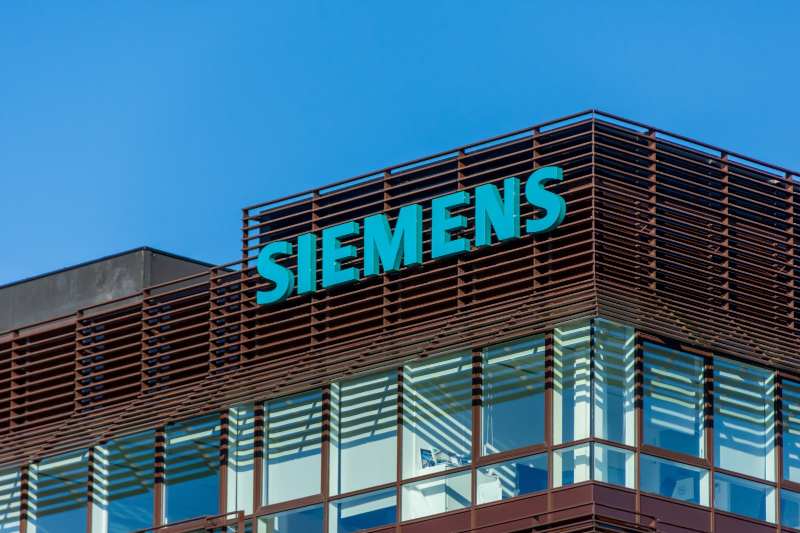
Siemens has been named a Leader in its 2026 assessment of life sciences R&D lab technology and consulting providers by the vendor assessment tool IDC MarketScape from International Data Corporation (IDC).
The recognition appears in the IDC MarketScape: Worldwide Life Sciences R&D Lab of the Future Technology Solutions and Consulting Services 2026 Vendor Assessment.
The tool assessed vendors based on their current capabilities and the strength of their strategy for the next three to five years.
According to the report, Siemens stood out for its end-to-end coverage of the pharma value chain and comprehensive digital twin and AI-enabled portfolio.
The report also valued the company's open and vendor-agnostic Smart Lab Ecosystem and its Enterprise Recipe Management approach built on the ISA-88 standard.
“Life sciences companies no longer need isolated digital transformation initiatives. They need a continuous digital thread that connects scientific discovery, process development and manufacturing execution,” said Maria Grahm, Vice President of Vertical Life Sciences at Siemens.
We believe this recognition validates Siemens' vision of creating a seamless, AI-enabled environment where insights generated in the lab can directly accelerate industrial-scale production and ultimately help bring therapies to patients faster.
Siemens defines the Lab of the Future as a connected, AI-enabled scientific environment where data, models and workflows move seamlessly across discovery, development, scale-up and manufacturing.
Successful partnerships
The IDC MarketScape noted that GSK had worked with Siemens and Atos to digitalise vaccine development and manufacturing, using AI, SIMATIC SIPAT, TIA Portal and Simcenter for virtual testing and predictive and prescriptive modelling with real-time sensor data.
According to Siemens, the resulting digital twin for adjuvant technologies cut physical experiments by 25 per cent, reduced batches by a double-digit percentage and shortened time to market for a new process.
AstraZeneca has also worked with Siemens, using its gPROMS-formulated process modelling technology to explore tablet manufacturing process design, quantify the criticality of material properties and process parameters on product quality attributes and generate significant savings in time, resources and materials — another win noted by IDC MarketScape.
The report also noted that Siemens' Smart Lab Ecosystem (SLE) is a strength for the company, enabling flexible, plug-and-play composition of room segments, devices and sensors to create adaptable research and laboratory spaces.
Siemens reported that the Smart Lab Ecosystem can deliver a 31% superior local air change rate, 29% faster particle removal and 45% better ventilation efficiency, alongside up to 60% faster lab design and construction and up to 80% reduction in changeover time between lab configurations.
Overall, the report highlights how these engagements support Siemens' broader AI strategy for life sciences, as the sector faces mounting pressure to modernise fragmented laboratory systems while navigating increasingly complex regulatory requirements.
After acquiring Dotmatics last year, Siemens has extended its digital thread further upstream into drug discovery, strengthening the link between scientific research and industrial execution.
Its Dotmatics Luma AI-native scientific intelligence platform brings together laboratory instruments, scientific applications and enterprise systems in a unified data environment, helping researchers make faster, more informed decisions across the product lifecycle.


