

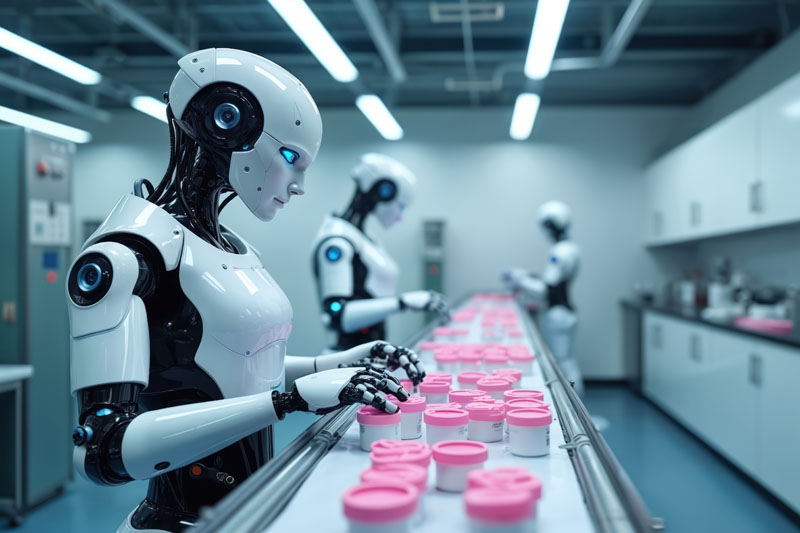
To combat this, the sector can leverage digital technologies to reduce the technology learning curve so that employees can focus on biomanufacturing.
Production in this field uses living organisms to produce commercially viable products or complete vital sustainability-led activities such as algae-based carbon capture.
Although the skills gap is a challenge for all manufacturing sectors, it is exacerbated when looking at biomanufacturing and wider life science practices as the level of scientific understanding is much more complex.
Unlike traditional manufacturing, bioprocessing requires a nuanced understanding of biology, chemistry and advanced engineering, with operators navigating stringent regulatory landscapes alongside scientific intricacies.
To address the skills gap, a people-based approach combined with digital advancement is required to support this vital industry as it produces life-saving medicines.


